Apparently, Pushback blog readers are too stupid for this post. Here's my lastest rejected:
A recent article by artist and designer Malcolm McLaren in Art Forum’s 500 Words has an interesting observation on art and western culture while talking about his recent Times Square installation Shallow:
Today, we’re so used to being stuffed with eye candy, with fast food, fast art, fast culture, that to take something really simple and just slow it down is the opposite of how we live. I think our culture today can be summed up by two words: authenticity and karaoke. They can both fit together, but you’ve got to be a bloody magician to make that happen, you’ve got to be some extraordinary alchemist. And some of these contemporary artists are. Many contemporary artists spend their days trying very hard to authenticate a karaoke culture.
At first, the idea of marrying the terms of authenticity and karaoke seems paradoxical. However, by imitating something, as in karaoke, we also can create something that unique and somewhat authentic through our own subjective reinterpretation. Such description of our culture suggests an unabashed recognition of our past in an attempt to create something new. It’s a balance between replication and the effort to make something that distinctly apart of our modern, western culture.
McLaren, who is probably best known for being the managing force behind The Sex Pistols, seems to have acutely recognized a facet of our culture that the attempt to create something wholly new and original that completely separates us from our past, whether it be in art or politics, is obsolete. (Admittedly, many would argue this would be impossible to do now anyways.) Rather, he sees our culture as something that wants to create something new and distinctive by pulling from the past and utilizing it.
Showing posts with label politics. Show all posts
Showing posts with label politics. Show all posts
Thursday, July 17, 2008

Monday, June 02, 2008
Conversations with my mom and the leftist ideals that are causing you communication problems part 1
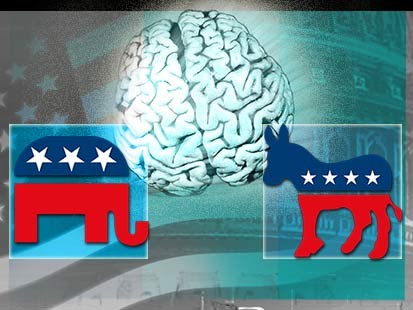
Over the past few weeks I have engaged in a serious of conversations with my mom that seem to overlap a lot of reoccurring themes in the news, my classrooms and conversations with other people. Many of these themes revolve around the presidential race and regard race and/or various accusations or issues with Barack Obama.
Many of these conversations have delved off from specifically talking about the topical subject in which started the discussion and into bigger themes that seem to overlap or include progressive/liberal/leftist(take you pick) ideology, ideas and attitudes.
The interesting aspect of these conversations is that they tend to be a conglomeration of taking very huge issues and interspersing them with immediate experiences involving these issues. This can be really annoying in some cases. However, this intersecting of extensive issues with personal experiences which are initiated from current events and topical subjects has been interesting and caused some self-reflection upon my generation, political standpoints and you. I would like to expound upon some things in maybe two or three different entries. Here’s number one:
A journalism conference in Los Angeles that I attended in January begin with two hours of panel discussions with various from the west coast news media. Somewhere along the lines, the topic of racism came up and many people were saying that the difficulty in dealing with racism in the news media and with the general public was the lack of discussion going on in academia, the media and general public about the subject of racism. Suddenly, Marc Cooper, contributing writer to The Nation spoke up and completely disagreed. He thought that people do talk about racism all the time. As a part-time professor, Cooper mentioned that in his classes it is constantly brought up. Cooper went on to assert that especially with the elements of race and gender in the presidential elections that people are talking about racism along with a series of other related issues quit frequently.
I have to say that I agree with Cooper’s assessment not just from my recent conversations with my mother but also my experience as a student over the last year as well. I cannot remember another time in my life where race has been so often apart of the headlines in mainstream media whether it’s the Huffington Post or Bill O’Reilly.
However, what this has also exposed is a certain ignorance, inability and general difficulty in talking about such issues as racism. I think this exposure is good though because it gives us a sort of litmus test of where we are as a country and the change that still needs to talk place. However, it also shows though the difficulty in actually talking about an issue like racism.
A recent pro-McCain propagandist video I watched took an Obama quote where he stated, “My grandma was a typical white person…” and asked the question of what would happen if McCain was to say, “typical black person.” Their assertion was that it would be the end of McCain’s presidential run. Maybe…but that’s not why I bring it up. In addition, I have written enough on this blog about such issues and I also trust that you know the intricacies and reasons why it is legitimately different if McCain to say such things. Although, generalizations normally aren’t a good idea whether your black, white or polka dot.
I bring this up though because it does reveal another difficulty of explaining these reasons especially to the generation of our parents or grandparents. It is even difficult to explain such reasons to some of our peers, even our college educated peers. I don’t say this to scoff or chastise these people but to reveal yet another real issue: How do we, as a left-leaning, progressive, young generation actively discuss these issues in a productive manner? It is a difficult task and if one thing seems for sure, it is that we aren’t doing a good job so far.
Imagine something that you passionately believe in or something that is so apart of the way you think that it almost comes natural. Now imagine engaging in a conversation with someone who is radically opposed to that? Difficult to talk to them? How do you engage in a conversation with this someone? We’ve probably all experienced this with a family member at the dinner table resulting in a loss of appetite or an uncomfortable silence.
I think it is imperative that we learn the tools and how to engage in a real conversation with these people. I also think that it is our biggest fault that we don’t or have difficulty in doing so. (When I say “our” I am meaning the American political “left”- which I know is a bit elusive but roll with me.) It seems that our reactions now usually consist of frustration, name calling or a general lack of participation on our part. Yet, we are all so willing to spout our opinions over a beer amongst our friends. What do we actually do though?
It’s difficult to set the feelings aside sometimes and have a real conversation with those who disagree. However, by not engaging in such discussions then how can change come about? Perhaps, we can not change their vote but I still find it advantageous to reach a point where they can at least understand our point of view. Conversely, I find it equally important that we learn their points of view as well. And if we reach that level field where we understand each others reasons and motivations that fuel our beliefs and vote then real development towards a possible change can occur.
Before concluding I think it is important to point out that there are numerous methods which tend to distract from the real issues and motivations. I am addressing mainly those chain emails you might get from that conservative relative. Perhaps, it’s a photo, video or declaring the lack of patriotism with subtle tones of racism and classism (i.e. Barack’s lapel pin, etc.). They are usually not very logical and tend to be aimed at getting under you skin-which they often do. However, these are probably not the reason why Grandpa is voting republican. Underneath the distracting BS, are the real reasons and it probably has to do with where they come from, their experiences, where they work or their current quality of life.
My mom mentioned these differences in talking about my grandmother (her mom). My grandma doesn’t have any children living at the house, she is retired and I assume apart of an upper-income bracket. Thus she is against Obama probably not because he doesn’t wear an American flag lapel pin but because she disagrees with socialized healthcare. There are other reasons which are not entirely illegitimate and I wouldn’t mind having a conversation with her about it. I think it’s important to know, understand and learn these opinions if any of us have any real desire to create change or swing the pendulum towards our direction in any small or big way.
I realize that the issues I brought up are things that have always occurred and will continue to. I don’t plan on anyone being able to evr permanently alter change this. However, I think, from what I have seen, there is a sincere lack of self-reflection on our part when it comes to these issues and it might do us all a bit of good in our own lives if we learn to step back, look how we are reacting to those opposed to us and maybe change our attitudes in hopes of changing theirs and making even a small difference.
Monday, May 05, 2008
Weather Report
Recently, I have been fascinated with the We Can Solve It commercial campaign promoting awareness and activism in regards to climate change and environmentalism.
In case you haven’t seen them yet, they involve supposed opposite politicians and public figures, sitting together on a couch, expressing that despite their differences, they both agree on the need for climate change. Here are the two that have been released so far.
Nancy Pelosi and Newt Gingrich
Admittedly, there are certain elements of this organization and their ad campaign which could be objectionable. More radical environmentalists tend to reject solving the impending climate issues through big business, special interest groups and the government. I am not well-versed in environmental politics but it seems that tendency from the radical left to work on the peripheries of society while refusing to cooperate or work with the organizations, systems, and/or governments they impose resolves in more conflict than positive, productive outcomes. In addition, it also seems that to take such an attitude is selfish and unconstructive.
Personally, I tend to see this sort of attitude quit frequently in Portland-a city which tends to boast its liberalism, open-mindedness and green consciousness. (side note: In October Business Week voted Portland the third most toxic city in the United States.) Attitudes tend to chastise those who don’t ride a bike or pour Biofuel into their cars. More than once, I have been scoffed at and dismissed for renouncing my 3 years of veganism. This also occurs in regards to political and religious issues. If you are not openly left then you’re possible friend ratio might drop significantly in this town-no joke! Obviously, this can personally frustrating. However, it has gotten to a point where one is tempted to question the foundation of leftist ideals altogether. Are all these kids doing it to be cool or do they really want to instigate realistic change?
In regards, to these commercials, I have personally found them to be possibly quite effective. It seems that a pragmatic outlook on the issue of climate change is that most people are uninformed and see no immediate incentive in making a change to their daily lifestyles. So regardless of how much money Pelosi and Gingrich are getting paid, and regardless of how much they are realistically attempting to push legislation forward towards creating constructive policy in climate issues, I think these commercials could be a beginning to getting people who don’t ride bikes, are vegan, food-forging anarchists or enviro-terrorists actually aware and maybe even involved with what is going on. It seems that such a cause really needs to target those who don’t live in conscious urban areas where being environmentally friendly is so easy. The suburbs need to know, the lower class need to know the incentives, major cities suffering from urban sprawl need funding to implement such measures.
I don’t see a lot of push for that kind of action with radical leftists. They seem content with their small, close-knit group of like-minded people. How is that ever going to change anything on a broader scale? Or maybe that isn’t the point....and maybe I'm just turning into a sellout.
P.S. I know Portland is a hip city but it’s frustrating that so many people who have ambitions of making social, political or environmental change move here. Portland has got enough people for that. People with such motivation should go to cities that really need to implement such change…like Detroit…or Phoenix….or even Los Angeles...or to the steps of Congress in D.C. Now that’s a challenge.
As they say: Portland-the most over qualified city of hyper-intelligent, MA holding baristas and bookstore clerks.
In case you haven’t seen them yet, they involve supposed opposite politicians and public figures, sitting together on a couch, expressing that despite their differences, they both agree on the need for climate change. Here are the two that have been released so far.
Nancy Pelosi and Newt Gingrich
Pat Robertson and Al Sharpton
Here is an excerpt from the About Us section of We Can Solve It
“The We Campaign is a project of The Alliance for Climate Protection -- a nonprofit, nonpartisan effort founded by Nobel laureate and former Vice President Al Gore. Our ultimate aim is to halt global warming. Specifically we are educating people in the
Admittedly, there are certain elements of this organization and their ad campaign which could be objectionable. More radical environmentalists tend to reject solving the impending climate issues through big business, special interest groups and the government. I am not well-versed in environmental politics but it seems that tendency from the radical left to work on the peripheries of society while refusing to cooperate or work with the organizations, systems, and/or governments they impose resolves in more conflict than positive, productive outcomes. In addition, it also seems that to take such an attitude is selfish and unconstructive.
Personally, I tend to see this sort of attitude quit frequently in Portland-a city which tends to boast its liberalism, open-mindedness and green consciousness. (side note: In October Business Week voted Portland the third most toxic city in the United States.) Attitudes tend to chastise those who don’t ride a bike or pour Biofuel into their cars. More than once, I have been scoffed at and dismissed for renouncing my 3 years of veganism. This also occurs in regards to political and religious issues. If you are not openly left then you’re possible friend ratio might drop significantly in this town-no joke! Obviously, this can personally frustrating. However, it has gotten to a point where one is tempted to question the foundation of leftist ideals altogether. Are all these kids doing it to be cool or do they really want to instigate realistic change?
In regards, to these commercials, I have personally found them to be possibly quite effective. It seems that a pragmatic outlook on the issue of climate change is that most people are uninformed and see no immediate incentive in making a change to their daily lifestyles. So regardless of how much money Pelosi and Gingrich are getting paid, and regardless of how much they are realistically attempting to push legislation forward towards creating constructive policy in climate issues, I think these commercials could be a beginning to getting people who don’t ride bikes, are vegan, food-forging anarchists or enviro-terrorists actually aware and maybe even involved with what is going on. It seems that such a cause really needs to target those who don’t live in conscious urban areas where being environmentally friendly is so easy. The suburbs need to know, the lower class need to know the incentives, major cities suffering from urban sprawl need funding to implement such measures.
I don’t see a lot of push for that kind of action with radical leftists. They seem content with their small, close-knit group of like-minded people. How is that ever going to change anything on a broader scale? Or maybe that isn’t the point....and maybe I'm just turning into a sellout.
P.S. I know Portland is a hip city but it’s frustrating that so many people who have ambitions of making social, political or environmental change move here. Portland has got enough people for that. People with such motivation should go to cities that really need to implement such change…like Detroit…or Phoenix….or even Los Angeles...or to the steps of Congress in D.C. Now that’s a challenge.
As they say: Portland-the most over qualified city of hyper-intelligent, MA holding baristas and bookstore clerks.
Monday, March 31, 2008
Misogyny, Racism and Pop Culture part 2
A recent hip-hop single blowing up all over the charts called “Independent” by southern rapper Webbie has caught my interest. As an avid listener to popular, mainstream hip-hop I am often confronted with tired and overused go-to terminology when describing drugs, women, guns or cars. The popular terminology to describe these themes that are regularly covered in most mainstream hip-hop singles seem to change by the month. However, many still remain.
One instance of terminology that has not evolved much in the last 20 years of hip hop is the terms used to describe women. Or rather not just all women, but a described lower-type of particular woman who is usually attributed to being untrustworthy, unfaithful and dishonest. We all know the terms and I don’t need to mention them. The terms are definitely derogatory, sexist and over-used. It is also these terms that mainstream hip-hop is most often criticized about. In the early 90’s it was violence, now it is the inherent sexism and objectification of woman that seems to be the focus of those critical of hip-hop.
Mind you, one will usually find me in defense of this terminology to a certain extent. I don’t support the misogyny but from a standpoint of art and self-expression I think it should be tolerated. In addition it is important to take into consideration the various iconography and terminology that hip-hop and black American urban youth culture is rooted in.
Finally, to single out hip-hop is ultimately unfair. Sexism and misogyny permeates throughout all aspects of pop culture. And if we are going to talk about such issues we need to take into consideration not just hip-hop culture but the greater context in which it exists in: pop culture. As I have previously quoted, Dr. Michael Eric Dyson points out that objectifying women is not solely rooted in just hip-hop:
"it ain’t hip-hop that’s teaching the broader culture how to dog a woman; it’s the broader culture’s ways and rules that are keyed in by hop-hop lyricists.”
Whether Dyson is correct is debatable. I think there is more of a fluidity to the relationship and that both sides perpetuate the problem at hand. Nevertheless, hip-hop cannot be completely singled out.
That being said, misogyny and sexism is still probably hip-hop’s biggest problem to a certain extent. The issue is complex and it is representing something about not only American black culture, but American society in itself as well. Unfortunately, these complexities are rarely examined or talked about in depth by either the artist performing the song or the overly, feminist close-minded liberal (or super conservative) who is criticizing the lyrics. (see my blog post Its Bigger Than Hip-Hop for more)
Enter Webbie’s “Independent”. In my last blog I mentioned that pop culture seemed to often act as an arena where taboos and issues such as race and sexism could move beyond the borders which are often towed in most social settings. Webbie’s “Independent” does just that. Here is song that is in support of a woman who is independent, motivated and who doesn’t rely on a man. She rejects traditional ideas of a woman’ role. And from the standpoint of Webbie that is the most attractive woman that a man can find. He encourages the listener to find a girl like that. However, the complexity doesn’t really stop there.
Where things get interesting is when Webbie and the other rappers allude to the fact that all she needs a man for is a “good drill”. Here we see the independent female taking on almost the role of the male “pimp” or “ player”. The attitude often permeating hip-hop that a “true” male only utilizes a female for sex and maybe a good back rub is now taken on by the female character described in Webbie’s song. It’s almost an attitude of “hey she is like us…and that is hot!!”
However, to counterpoint, none of the rappers in the song utilize the tired, old, go-to terms that are used to describe a woman in hip-hop songs. To his credit, this is impressive. Webbie has essentially created a single that appeals to the lowest-common denominator, made it popular, and never has to use any of the terms or lyrics that seemed to have become almost a necessity to make a song popular on mainstream hip-hop charts.
It certainly isn’t going to get ultra-feminist to go run out and buy his record. Nor even please them to any degree. Nevertheless, in a genre of music that regardless of the reasons and complexities is overrun with overt sexism; I find Webbie’s contribution to be highly fascinating and worth a listen.
Finally, to add to the complexity of the song, “Independent” is actually a bit of a lyrical re-working of one of his older songs called, “Bad Bitch”. So its almost as if by taking out the go-to term he was able to make a song that was much more popular than his previous single.
strange…
Here’s the video. P.S. I love this song and sing it on the regular:
Friday, March 28, 2008
Misogyny, Racism, Pop Culture and Bret Michaels' wig
The democratic primary elections are spawning intense debate and discourse in both the media and your local bar on the issue of race and gender. While there have been some calls to move beyond these topics when examining which candidate one should elect, the conversation seems to always fall back into this touchy and passionate subject matter.
Really though, it’s a good thing. Never in my short 24 year life do I recall such continual and intense discourse in all aspects of our social spectrum on the issue of gender and race. Needless to say, a whole lot is being revealed about our society. While some of it may be ugly and difficult to deal with, the very fact that the conversation is taking place is a good thing. If we are going to ever begin to break down the institutionalized structures and generalizations that perpetuate this oppression then the first thing to do is acknowledge that they exist. If anything talking about it allows you to really understand what the other person, who is supposedly on the otherside of the conversation or poltical spectrum, is all about.
Nevertheless, emotions do fly and one approach to this conversation is examining the historical context of race and gender in our country in an attempt to reveal who has suffered more: blacks or women. Of course, there is a lot wrong with this approach. First and foremost should be the place of black women. Where do they fit in to this conversation? In addition, making comparisons about who has suffered more is the unfortunate outcome of a near-sighted perspective that fails to examine the possibilities for moving beyond the small framework of such an argument. For the sake of this blog let us just agree on one thing: both have suffered and continue to be marginalized.
A reworking of this question that has recently arisen in conversatons is rooted in a more contemporary context that may be more constructive than who had it worse. Rather, let us ask what is more prevalent in today’s society: misogyny or racism?
I don’t ask this question to determine who would be a better candidate. In fact, I think this question should bear no impact on one’s vote. Rather, I think it is an interesting point to bring up to reveal the differing characteristics and nuances that these forms of marginalization are presented in society today. If anything, an attempt at assessing this question can help is lead to a better understand of the two in a contemporary context.
Due to a few recent encounters with pop culture and a conversation with a friend, it seems that while racism does still exist, it seems to exist on a much more subversive, almost unconscious level. Out right blatant racism is hardly tolerated in American society and especially in mainstream culture and media. Certainly it is there but it’s all below the surface. Please inform me if one thinks I am incorrect here. Remember, I am not saying that it doesn’t exist, its just not so outright blatantly expressed.
However, the same cannot necessarily be said for misogyny which seems prevalent in society on a much more apparent level. Turn on your television; it doesn’t take a gender studies major to realize that there is serious sexism still going on in mainstream society. Recently, a few things brought this revelation to my attention:
Example one: Rock of Love.
For those of you unfamiliar, Poison lead singer Bret Michaels has a show solely dedicated to finding his next “rock-girl of love.” Sure, these girls put themselves in this position but there is something seriously wrong (but admittedly…amazingly entertaining) going on in this show. It’s the ultimate groupie fantasy played out on television. Bret spends a day with these girls doing various different activities with them. Then equipped with pen and a pad of paper (no doubt the same one that he writes down those genius lyrics on) he determines which girls get to say on the show and which need to leave.
“Well, Katrina is a bit of wacko but she has got a good rack so that’s a bonus.”
This show is completely absurd. Nevertheless, the sexism is obviously apparent and perpetuating stereotypes and even encouraging them with each passing second. Watching the show, I couldn’t help but think of a show on television that would be this apparent in perpetuating racist generalizations about minorities. I don’t think such a show exists nor could it.
Example 2: Miss Bimbo
Anyone hear about this video game site yet? It basically a RPG where girls as young as seven are encouraged girls to go on crash diets and get breast implants. Yikes!
As CNN reports:
“When a girl signs up, they are given a naked virtual character to look after and pitted against other girls to earn "bimbo" dollars so they can dress her in sexy outfits and take her clubbing.”
Once again, it’s hard to think of a similar video game site that would be so apparent in its racism. I suppose Grand Theft Auto series would be the closest to perpetuating such ideas…but even the sometimes racist undertones come off not so apparent and in your face.
It is at this point in the conversation that I don’t know where to necessarily go. Misogyny and sexism seem to reveal themselves in a lot more apparent ways in mainstream media and pop culture. However, we can’t all get too serious on ourselves and become stick in the mud super liberals with no sense of humor. After all, generalizations do seem to exist on partial truths. (Thus the beauty and hilariousness of the blog: Stuff White People Like) Furthermore, perhaps this just reveals that the subtle nature of racism in this country is a sign that it is all that more ingrained and harder to educate about, examine and pinpoint. Nevertheless, the observation has been made.
The line between what is entertaining and what is perpetuating the marginalization of a certain group of people can often be fuzzy. All I can conclude is that there doesn't seem to be a whole lot you can do to change it on the level of pop culture. In fact, it seems that such generalizations that walk that line is what drives pop culture. Thus, my only conclusion at this point is that the level of mainstream pop culture seems to be a arena where touchy issues such as sexism, racism and other forms of oppression are able to cross boundaries and partially exploit taboos that are otherwise discouraged from conversations in our interactions within most social settings. However, there is also an interesting tension because even the arena of pop culture is restricted in regards to language, imagery and some types of subject matter. Thus, the freedom to explore these sensitive issues beyond the context of how they are typically discussed in social forums(excluding some academic levels) is given, yet not without certain restrictions. The end result is often fascinating and highly creative. (Personally, it often makes low-brow, trash culture so much more interesting to me than any form of high-art or culture. )
Thus, when examing an issues like misogyny or racism within a contemporary context is seems that often one of the best places to start is by flipping on your television. What are you seeing and what are you NOT seeing? Obviously, there are many more levels to be explored. Does pop culture really represent our society? How much are we dictating mainstream culture? How much does pop culture dictate how we act, think or consume? Regardless of these debatable points, the arena of pop culture is a fascinating place to watch some of these issues play out and often times is a seemingly more accurate, true, representation of where and how these issues permeate into American society.
Final question: does anyone else think Bret Michaels is wearing a wig?

Saturday, February 09, 2008
Huckabee
Taken from the Washington Post today:
"President Bush yesterday urged attendees of the Conservative Political Action Conference in Washington, D.C., to unite behind the presumed nominee. Although he did not mention McCain by name, the president said whoever ends up being the Republican nominee will represent conservative values.
Just a personal observation:
Say what you will about Huckabee, I can't help but think this guy is adorable. Yeah...yeah...everyone talks about how he is some religious, conservative nut. However in comparison to Bush and/or Romney, this guy is way more likable.
With numerous appearances and participation with Colbert and Conan's shenanigans and as a bass player in a band called, "Capitol Offense"; this guy is like the harmless Christian neighbor who bakes the neighborhood yummy banana bread on Christmas that you can't help but like even if your politics are different.OBVIOUSLY, I don't want him to run our country but it just seems everyone is too ready to take a dualistic approach to this presidential campaign. Huckabee isn't my candidate but you can't help but feel that there is alot less bullshit with this guy than other candidates...including Hillary-who as much as I want to like, is a really unconvincing speaker.
All I am saying is just because he is a conservative Christian doesn't mean he is an evil, horrible person. Maybe just a bit confused and you know...homely and un-hip no matter how hard he tries.
"President Bush yesterday urged attendees of the Conservative Political Action Conference in Washington, D.C., to unite behind the presumed nominee. Although he did not mention McCain by name, the president said whoever ends up being the Republican nominee will represent conservative values.
Earlier today, Huckabee disputed the assertion that McCain had locked up the GOP nomination and said he won't quit the presidential race.
"I didn't major in math," Huckabee told a cheering crowd at the Conservative Political Action Conference meeting, according to the AP. "I majored in miracles."
_____Just a personal observation:
Say what you will about Huckabee, I can't help but think this guy is adorable. Yeah...yeah...everyone talks about how he is some religious, conservative nut. However in comparison to Bush and/or Romney, this guy is way more likable.
With numerous appearances and participation with Colbert and Conan's shenanigans and as a bass player in a band called, "Capitol Offense"; this guy is like the harmless Christian neighbor who bakes the neighborhood yummy banana bread on Christmas that you can't help but like even if your politics are different.OBVIOUSLY, I don't want him to run our country but it just seems everyone is too ready to take a dualistic approach to this presidential campaign. Huckabee isn't my candidate but you can't help but feel that there is alot less bullshit with this guy than other candidates...including Hillary-who as much as I want to like, is a really unconvincing speaker.
All I am saying is just because he is a conservative Christian doesn't mean he is an evil, horrible person. Maybe just a bit confused and you know...homely and un-hip no matter how hard he tries.

Wednesday, January 23, 2008
Thursday, January 10, 2008
Article
In conclusion to my previous Stewart/Colbert blog...go to Campus Progress to see my recently published article.
Digg It, Stumble, Delicious IT...Whatever...help the article get some traction PLEASE.
Digg It, Stumble, Delicious IT...Whatever...help the article get some traction PLEASE.
Tuesday, October 09, 2007
Get active(tense)
Second installment of Curmudgeon Corner coming out in a week or two...getting sorta serious and political in this one. And dare I say...hopeful too...
Our Idle Crime
A popular sticker ambiguously stating the date 1/20/2009, implying Bush's last day in office, has been a common sight in Portland for the last several years. I eagerly wait that day along with many of us. However the sticker instigates more than just feelings of hopeful anticipation, but also reveals a much bigger predicament that much damage can still be down from now until that date.
The easiest thing to do in America right now in regards to issues of politics and the state of our civic environment is to point the finger at Bush. And while Bush and co. are the primary individuals for the mess that we and a new cabinet come 2009 will have to face, it is no longer enough to simply sit and discuss it. Does anyone actually believe that getting Bush out of office will suddenly change everything? Continuing to put our faith (and vote) into those opposing him and his policies is proving to do very little. More must be done.
Unfortunately the American people are looking passive and easily controllable. Comparative to our history, the drive of the American people to organize and instigate social and political change is at a low point. The lack of organized protest against the policies of our government is a clear indication of our disillusionment. Yet the absence our dedication is the greatest crime that any anti-war, anti-Bush or anti-conservative American can do right now. Stickers and conversations are not enough. Scrawling “fu*k Cheney” on a bathroom stall in thick, black pen is a mute point.
Is this passiveness the fate of our future? Or can we once again become a country that doesn’t so easily draw their opinion according to party lines but whether or not the social welfare and interest of the greater population is being addressed and met? United we are not, but divided does not need to imply idleness and inactivity.
The issues at hand are not one’s that many of us would disagree over. One would be hard-pressed to find a strong contingent of people in this country who openly supports the justification of torture, the deterioration of privacy or the growing dictatorial inflation executive powers.
The war in Iraq, the failing infrastructure of our nation, our growing national debt, the destruction of our education system, and the increasingly important issue of climate change are all enough to make you mad. But how much of is a priority to you? How much do you really do? What does it take to cause mass strikes and protests in America today?
The answer has yet to be determined. However the likelihood is seemingly bleak. Why? Well, consider your life:
Can you still go to the movies? Can you still play your Nintendo Wii? Can you still check Myspace? Can you still spend an evening in a bar with your opinions and friends? Yes, you can. And as long as a majority of us are still can participate in these activities then major social or political change seems doomed to fail.
In the most recent issue of Harpers, author Garret Keizer wrote an article determining that the greatest depredation Bush’s presidency has caused is the pillaging of hope in the American people. Keizer goes on to call for a general strike by all Americans that would entail a major curtail of consumption, work and activities involving communication such as watching TV or utilizing a cell phone. Despite its passion and logical points of contention against American idleness, the article reads like an unlikely pipe-dream. However, Keizer is quick to attack such disbelief:
“…how readily and with what well-practiced assurance would your find yourself producing the words “It won’t do any good”? Plausible and even courageous in the mouth of a patient who knows he’s going to die, the sentiment fits equally well in the heart of a citizenry that believes it is already dead.”
Over the last seven years America has proven to be almost unwilling to habitually participate in such movements. On Sunday we are protesting, but by Monday we are back at school and our jobs. It is as if we have forgotten how to properly and effectively demonstrate. And that should bother you.
Right now, closing the growing disparity between us and the bureaucrats that run this country is an essential action that must be taken. We must show not only our current administration but those that will come after it as well that the future of our fate will be determined by us.
Can we be assured that a new president will be enough to steer us back into the right direction? The state our current situation should be enough to not allow one to feel safely guaranteed.
Consider: How many soldiers and civilians will die while we wait for the next president, or congressional discussion to arrive? How many prisoners at Abu Ghraib will get tortured? Or as Keizer presented in his article through the eloquent words of the Chilean poet César Vallejo:
“A man shivers with cold, coughs spits
up blood.
Will it ever be fitting to allude to my inner soul?...
A cripple sleeps with one foot on his
shoulder.
Shall I later on talk about Picasso, of
all people?...
Someone is cleaning a rifle in his kitchen,
What’s the worth of talking about the Beyond?”
A bomb explodes in Iraq killing civilians and soldiers?
Shall I play videogames?
Our Idle Crime
A popular sticker ambiguously stating the date 1/20/2009, implying Bush's last day in office, has been a common sight in Portland for the last several years. I eagerly wait that day along with many of us. However the sticker instigates more than just feelings of hopeful anticipation, but also reveals a much bigger predicament that much damage can still be down from now until that date.
The easiest thing to do in America right now in regards to issues of politics and the state of our civic environment is to point the finger at Bush. And while Bush and co. are the primary individuals for the mess that we and a new cabinet come 2009 will have to face, it is no longer enough to simply sit and discuss it. Does anyone actually believe that getting Bush out of office will suddenly change everything? Continuing to put our faith (and vote) into those opposing him and his policies is proving to do very little. More must be done.
Unfortunately the American people are looking passive and easily controllable. Comparative to our history, the drive of the American people to organize and instigate social and political change is at a low point. The lack of organized protest against the policies of our government is a clear indication of our disillusionment. Yet the absence our dedication is the greatest crime that any anti-war, anti-Bush or anti-conservative American can do right now. Stickers and conversations are not enough. Scrawling “fu*k Cheney” on a bathroom stall in thick, black pen is a mute point.
Is this passiveness the fate of our future? Or can we once again become a country that doesn’t so easily draw their opinion according to party lines but whether or not the social welfare and interest of the greater population is being addressed and met? United we are not, but divided does not need to imply idleness and inactivity.
The issues at hand are not one’s that many of us would disagree over. One would be hard-pressed to find a strong contingent of people in this country who openly supports the justification of torture, the deterioration of privacy or the growing dictatorial inflation executive powers.
The war in Iraq, the failing infrastructure of our nation, our growing national debt, the destruction of our education system, and the increasingly important issue of climate change are all enough to make you mad. But how much of is a priority to you? How much do you really do? What does it take to cause mass strikes and protests in America today?
The answer has yet to be determined. However the likelihood is seemingly bleak. Why? Well, consider your life:
Can you still go to the movies? Can you still play your Nintendo Wii? Can you still check Myspace? Can you still spend an evening in a bar with your opinions and friends? Yes, you can. And as long as a majority of us are still can participate in these activities then major social or political change seems doomed to fail.
In the most recent issue of Harpers, author Garret Keizer wrote an article determining that the greatest depredation Bush’s presidency has caused is the pillaging of hope in the American people. Keizer goes on to call for a general strike by all Americans that would entail a major curtail of consumption, work and activities involving communication such as watching TV or utilizing a cell phone. Despite its passion and logical points of contention against American idleness, the article reads like an unlikely pipe-dream. However, Keizer is quick to attack such disbelief:
“…how readily and with what well-practiced assurance would your find yourself producing the words “It won’t do any good”? Plausible and even courageous in the mouth of a patient who knows he’s going to die, the sentiment fits equally well in the heart of a citizenry that believes it is already dead.”
Over the last seven years America has proven to be almost unwilling to habitually participate in such movements. On Sunday we are protesting, but by Monday we are back at school and our jobs. It is as if we have forgotten how to properly and effectively demonstrate. And that should bother you.
Right now, closing the growing disparity between us and the bureaucrats that run this country is an essential action that must be taken. We must show not only our current administration but those that will come after it as well that the future of our fate will be determined by us.
Can we be assured that a new president will be enough to steer us back into the right direction? The state our current situation should be enough to not allow one to feel safely guaranteed.
Consider: How many soldiers and civilians will die while we wait for the next president, or congressional discussion to arrive? How many prisoners at Abu Ghraib will get tortured? Or as Keizer presented in his article through the eloquent words of the Chilean poet César Vallejo:
“A man shivers with cold, coughs spits
up blood.
Will it ever be fitting to allude to my inner soul?...
A cripple sleeps with one foot on his
shoulder.
Shall I later on talk about Picasso, of
all people?...
Someone is cleaning a rifle in his kitchen,
What’s the worth of talking about the Beyond?”
A bomb explodes in Iraq killing civilians and soldiers?
Shall I play videogames?
Subscribe to:
Posts (Atom)


