Apparently, Pushback blog readers are too stupid for this post. Here's my lastest rejected:
A recent article by artist and designer Malcolm McLaren in Art Forum’s 500 Words has an interesting observation on art and western culture while talking about his recent Times Square installation Shallow:
Today, we’re so used to being stuffed with eye candy, with fast food, fast art, fast culture, that to take something really simple and just slow it down is the opposite of how we live. I think our culture today can be summed up by two words: authenticity and karaoke. They can both fit together, but you’ve got to be a bloody magician to make that happen, you’ve got to be some extraordinary alchemist. And some of these contemporary artists are. Many contemporary artists spend their days trying very hard to authenticate a karaoke culture.
At first, the idea of marrying the terms of authenticity and karaoke seems paradoxical. However, by imitating something, as in karaoke, we also can create something that unique and somewhat authentic through our own subjective reinterpretation. Such description of our culture suggests an unabashed recognition of our past in an attempt to create something new. It’s a balance between replication and the effort to make something that distinctly apart of our modern, western culture.
McLaren, who is probably best known for being the managing force behind The Sex Pistols, seems to have acutely recognized a facet of our culture that the attempt to create something wholly new and original that completely separates us from our past, whether it be in art or politics, is obsolete. (Admittedly, many would argue this would be impossible to do now anyways.) Rather, he sees our culture as something that wants to create something new and distinctive by pulling from the past and utilizing it.
Showing posts with label art. Show all posts
Showing posts with label art. Show all posts
Thursday, July 17, 2008

Wednesday, May 21, 2008
Terry's miss
Sports- art with muscles.
I saw one of the most heartbreaking moments ever in sports today. It nearly brought me to tears. For those of you that scoff at sports there is certain elements of theater, drama, spectacle and even art that it contains which cannot be denied. They say sports players get paid too much. If that is true then so do actors and so do some artists,writers and even musicians. Film, television and sometimes to a lesser degree music and literature, are just often more easily related to than sports. Either that or there is a certain element of fantasy that taps into the realms of our imagination that fits our dreams and desires and expresses them onto a screen, a canvas, a book or into a song.
I wouldn't exactly equate such with sports. (Although some would...) In addition, I don't think it is or ever will be something for everybody. However, I will say that for those who understand your game of choice and all the nuances involved, the reactions can often be on the same emotional level than these other forms of entertainment and art. That being said, what I saw today definitely emitted a similar response in me that is usually reserved for other such mediums.
Sure, sports is just entertainment but if anything; what happens out on the field isn't scripted and it can never be replayed the exact same way twice. This only makes it all that more fascinating, affecting and unique.
John Terry-my heart goes out to you man.
I saw one of the most heartbreaking moments ever in sports today. It nearly brought me to tears. For those of you that scoff at sports there is certain elements of theater, drama, spectacle and even art that it contains which cannot be denied. They say sports players get paid too much. If that is true then so do actors and so do some artists,writers and even musicians. Film, television and sometimes to a lesser degree music and literature, are just often more easily related to than sports. Either that or there is a certain element of fantasy that taps into the realms of our imagination that fits our dreams and desires and expresses them onto a screen, a canvas, a book or into a song.
I wouldn't exactly equate such with sports. (Although some would...) In addition, I don't think it is or ever will be something for everybody. However, I will say that for those who understand your game of choice and all the nuances involved, the reactions can often be on the same emotional level than these other forms of entertainment and art. That being said, what I saw today definitely emitted a similar response in me that is usually reserved for other such mediums.
Sure, sports is just entertainment but if anything; what happens out on the field isn't scripted and it can never be replayed the exact same way twice. This only makes it all that more fascinating, affecting and unique.
John Terry-my heart goes out to you man.

Monday, May 12, 2008
Street Art goes to the Tate
As the street artists community continues to expand, evolve and grow in popularity, the Tate Modern in London has decided to dedicate an exhibition this month to some of its more established and known figures. According The Observer, many of the artists are now beginning to be commissioned to create pieces for millions of dollars in the homes of famous figures. Apparently, Brad Pitt and Angelina Jolie just had a Bansky piece put up in their living room. Good to know that he no longer needs to throw up his pieces sans permission in the MOMA. Not to mention that his hometown in England has trained the local sanitation department to no longer paint over his pieces.
In addition, May 5th was concluded the last day first ever Cans Festival-a stencil art battle in London under the Waterloo Station Bridge.
More power to the these street artists but it does seem to take away a bit from the ideas which street art is founded off of. Not like it hasn't happen before though...e.g. Basquiat, etc.


Images courtesy of Wooster Collective.
A website dedicated to exposing street art around the globe.
In addition, May 5th was concluded the last day first ever Cans Festival-a stencil art battle in London under the Waterloo Station Bridge.
More power to the these street artists but it does seem to take away a bit from the ideas which street art is founded off of. Not like it hasn't happen before though...e.g. Basquiat, etc.
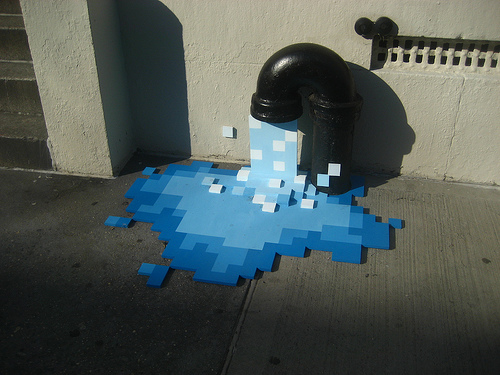
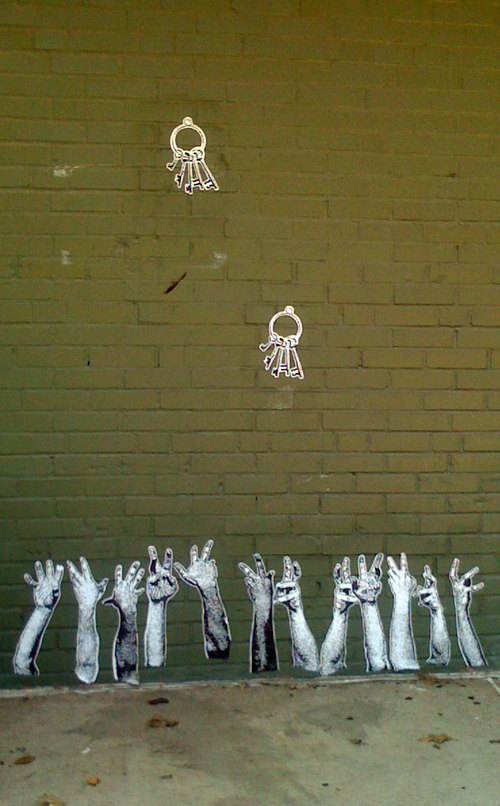
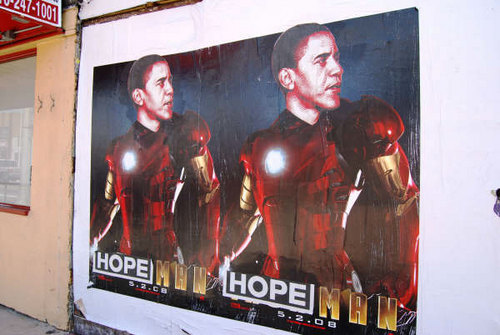
Images courtesy of Wooster Collective.
A website dedicated to exposing street art around the globe.
Sunday, April 20, 2008
Translation
Taken from the often entertaining, interesting and totally worth a hit every now and then Litlab.
Can we even do this in our language? Probably, but it would sound silly. In addition, I find the Czech portion really aesthetically pleasing to look at. I want to hear audio of this being read.
enjoy:
ída Sobková: Prosté popisování pátečního poledne / A Simple Describing of a Friday Noon
A short story in Czech where every word starts with the same letter and then translated in English.
In Czech:
Prší. Pátek patnáctého prosince. Pošmourné počasí protíná polední pauzu. Pozdní podzim povzbuzuje pápěří pampelišky poletovat. Plnicí pero popsalo papír poletujíjcí pod podloubím. Proslulý proutník Pavel provází podél podloubí pihovatou Pavlínu. Proč právě Petra? Proradný prostopášník povalil Pavlínu pod platan, poodhalil Pavlínin pihovatý pupík. Pořád poprchává. Pavlína promrzla. Pojď popijeme pro pohodu. Pokračují paloukem, přicházejí k pohostinství „Pod Pařezem.“ Popíjejí Plzeňský Prazdroj, peprmintku, punč – prostě praví požitkáři. Pojď popít pomálu podomácku pálené pálenky. Potřebujeme přejít potok. Pak projdeme pokosené pšeničné pole. Promiň, provlhlo pověšené prádlo. Proč? Prší, pitomče. Pan porybný povídal podivné předpovědi. Pokud povídá pravdu, přijde pravá pohroma. Přehrada potřebuje poopravit proti prolomení. Pak prošel pohřební průvod. Paní Pazderková podlehla příušnicím. Protivný policista Parma pokukuje po plačících pozůstalých. Podívej, pomaličku přestává pršet. První pichlavé paprsky prozařují palouk. Přines pálenku. Pec plápolá posledním posmoleným polenem. Pavlína pomalu přestává plakat, promrznutí přestává. Ponenáhlu poleno praskne, plamen povyskočí, podnapilý Pavel polije Pavlínu pálenkou. Pavlína plamenně poskakuje. Podívej pitomče, pálenka podporuje plameny. Popadne placatku pálenky, praští Pavla po palici. Pavla pohltí plameny. Pospíchejme potopit postavy pod proud potoka. Plameny pohasly. Pavel povídá Pavlíně: Přestávám pít pálenku. Pravím, Plzeňský Prazdroj, Punč, peprmintku pouze. Pitomý pátek.
In English:
Raining. Friday, the fifteenth December. Murky weather passes over a noon-hour. Late fall encourage blow ball to fly. A fountain pen overwrote the paper flying under the arcade. Renowned voluptuary Paul promenades freckled Pauline along the arcade. Why Pauline? Perfidious libertine laid Pauline under the sycamore; he undressed Pauline’s freckled bellybutton. It’s still drizzling. Pauline is freezing. Come, we’ll partake for strain. They continue walking throughout the glade; they are arriving to the pub “Under the Tree Stump.” They drink Pilsner Urquell, Peppermint, and Negus – simply real sybarites. Come drink some of my family style eau-de-vie. We need to cross the creek. Then go through the mown wheat field. Sorry, the hanged clothes soaked. Why? It’s raining, you idiot. Water bailiff told me strange prognoses. F he told me the truth a real disaster is coming. Reservoir needs to be repaired against crashing. Then a funeral procession came. Mrs. Pazderková succumbed to parotis. Mean policeman Parma peeked around on crying mourners. Look, the rain is stopping. First sharp rays are shining on the glade. Bring the eau-de-vie. The fireside flame with the last pitched log. Pauline slowly stops to cry, she is not freezing anymore. All of a sudden the log crack, the flame jumps out, tipsy Paul spill eau-de-vie to Pauline. Pauline falmy jumps around. Look, you idiot, eau-de-vie supports the flames. She snatched the flask and punch Paul on nob. Paul is eaten by flames. Let’s go hurry to sink our bodies under the flow of the creek. Flames die down. Paul is telling to Pauline: No more eau-de-vie drinking. I say, Pilsner Urquell, Negus or Peppermint only. Damned Friday.
Can we even do this in our language? Probably, but it would sound silly. In addition, I find the Czech portion really aesthetically pleasing to look at. I want to hear audio of this being read.
enjoy:
ída Sobková: Prosté popisování pátečního poledne / A Simple Describing of a Friday Noon
A short story in Czech where every word starts with the same letter and then translated in English.
In Czech:
Prší. Pátek patnáctého prosince. Pošmourné počasí protíná polední pauzu. Pozdní podzim povzbuzuje pápěří pampelišky poletovat. Plnicí pero popsalo papír poletujíjcí pod podloubím. Proslulý proutník Pavel provází podél podloubí pihovatou Pavlínu. Proč právě Petra? Proradný prostopášník povalil Pavlínu pod platan, poodhalil Pavlínin pihovatý pupík. Pořád poprchává. Pavlína promrzla. Pojď popijeme pro pohodu. Pokračují paloukem, přicházejí k pohostinství „Pod Pařezem.“ Popíjejí Plzeňský Prazdroj, peprmintku, punč – prostě praví požitkáři. Pojď popít pomálu podomácku pálené pálenky. Potřebujeme přejít potok. Pak projdeme pokosené pšeničné pole. Promiň, provlhlo pověšené prádlo. Proč? Prší, pitomče. Pan porybný povídal podivné předpovědi. Pokud povídá pravdu, přijde pravá pohroma. Přehrada potřebuje poopravit proti prolomení. Pak prošel pohřební průvod. Paní Pazderková podlehla příušnicím. Protivný policista Parma pokukuje po plačících pozůstalých. Podívej, pomaličku přestává pršet. První pichlavé paprsky prozařují palouk. Přines pálenku. Pec plápolá posledním posmoleným polenem. Pavlína pomalu přestává plakat, promrznutí přestává. Ponenáhlu poleno praskne, plamen povyskočí, podnapilý Pavel polije Pavlínu pálenkou. Pavlína plamenně poskakuje. Podívej pitomče, pálenka podporuje plameny. Popadne placatku pálenky, praští Pavla po palici. Pavla pohltí plameny. Pospíchejme potopit postavy pod proud potoka. Plameny pohasly. Pavel povídá Pavlíně: Přestávám pít pálenku. Pravím, Plzeňský Prazdroj, Punč, peprmintku pouze. Pitomý pátek.
In English:
Raining. Friday, the fifteenth December. Murky weather passes over a noon-hour. Late fall encourage blow ball to fly. A fountain pen overwrote the paper flying under the arcade. Renowned voluptuary Paul promenades freckled Pauline along the arcade. Why Pauline? Perfidious libertine laid Pauline under the sycamore; he undressed Pauline’s freckled bellybutton. It’s still drizzling. Pauline is freezing. Come, we’ll partake for strain. They continue walking throughout the glade; they are arriving to the pub “Under the Tree Stump.” They drink Pilsner Urquell, Peppermint, and Negus – simply real sybarites. Come drink some of my family style eau-de-vie. We need to cross the creek. Then go through the mown wheat field. Sorry, the hanged clothes soaked. Why? It’s raining, you idiot. Water bailiff told me strange prognoses. F he told me the truth a real disaster is coming. Reservoir needs to be repaired against crashing. Then a funeral procession came. Mrs. Pazderková succumbed to parotis. Mean policeman Parma peeked around on crying mourners. Look, the rain is stopping. First sharp rays are shining on the glade. Bring the eau-de-vie. The fireside flame with the last pitched log. Pauline slowly stops to cry, she is not freezing anymore. All of a sudden the log crack, the flame jumps out, tipsy Paul spill eau-de-vie to Pauline. Pauline falmy jumps around. Look, you idiot, eau-de-vie supports the flames. She snatched the flask and punch Paul on nob. Paul is eaten by flames. Let’s go hurry to sink our bodies under the flow of the creek. Flames die down. Paul is telling to Pauline: No more eau-de-vie drinking. I say, Pilsner Urquell, Negus or Peppermint only. Damned Friday.
Friday, April 18, 2008
Questionable Art?

Aliza Shvarts, a Yale art major has decided on something peculiar and controversial for her senior art project. As reported by the Yale Daily News Shvarts has decided to document her nine-month process of artificially inseminated herself "as often as possible" while periodically taking abortifacient drugs to induce miscarriages. She plans to display her relics of the piece by showing video recordings of these forced miscarriages as well as preserved collections of the blood from the process.
Needless to say, the project got national attention and sparked much debate. While it was recently reported that Shvarts was supposedly faking the whole process or re-titled as "creative fiction" by Yale university, the piece brings up an interesting question of when, if ever, can art go too far? Are there boundaries to art when it comes to as one student from Yale stated as, "manipulating life for the benefit of her art"? Without any applicable normative aesthetic to determine what is or isn't art(please argue this..please?!), the question remains if all morality and/or ethnics are also absent from art today as well.
My immediate impulse would be yes. Academically, there seems to be an emphasis on the relativity of morality depending upon what eachh culture we are specifically examining. We are taught to recognize and respect these cultural differences. However, issues do arise. International human rights efforts often encounter problems and/or lack of support when it comes to bringing up issues such as female genital mutilation. While one may be hard pressed to find someone who would actually argue PRO for this, it isn't completely unthinkable to devise an argument which would be founded in a tolerance for such practices in order to not project one's culture,and all the norms and morals that go with it, onto this 'other' culture.
The point is if we look at art then it is easy to see such application of certain ethical standards to have deteriorated due to the arrival of a sort of "liberalism" (i guess...) which emphasizes (may be too much) a tolerance for all people, their way of life and practices. On paper it sounds great. However, when you get into issues like FGM, it becomes a problem. The same goes for art. Anything goes, right? Well, what about Ms. Shvarts?
Personally, I don't have a problem with Ms. Shvarts piece. Actually, I find it fascinating and all that much more disappointing that she actually DIDN'T go through with it. I think her piece speaks to the fascination and sort of "mysticism" if you will of the female body that still exists in today's society.
In addition, art already has a long history of artists who have utilized, manipulated and damaged their bodies for art. Marina Abramovic, Chris Burden, or Tehching Hsieh are a few performance artists who immediately come to mind. Their work was much more taxing on the body than Shvarts proposed piece. Even artists like Eva Hesse who worked with toxic material all her life have sacrifice health for their projects. There doesn't seem to be too much of an issue with these artists because they are not hurting(usually) anyone else in the process. However, what happens when we actually do cross that bridge and effect others? Unwillingly? Are we violating an 'ethics' of art? Or does, and if not should, such a thing still exists?
Costa Rican artist Guillermo Vargas ‘Habacuc’ sometime last year in a gallery in Managua tied a dog up in a gallery, put it on display, then let it starve to death. As reported, People entered and left, day in and day out. The dog remained without water or food and eventually gave up the ghost. The artist has said a number of different things about the piece. Most of what is said refers back to the situation of massive amounts of stray dogs that are throughout the major cities of Costa Rica. One statement the artist suggest that if he had not captured this dog and tied him up he would of died anyways and no one would of noticed. (Google his name for more. Its hard to get a good link to anything that isn't completely biased). Recently, his name has blown up all over the Internet again because he has been invited to reenact the piece in Honduras.
Now, I am an animal lover and yes I find this disturbing. However, apart of me feels that this is an overly-hyped issue that roots back to our westernized, first-world attitudes towards animals and pets. Frankly, animal rights would probably seem like a pretty absurd movement in most third world countries where huge portions of the population are going without food. However, I don't want to go so far as the fully back that assumption so rather I will stick with what I know which is that we, in this country, have the privilege to even have pets. Our attitudes towards domesticated cats and dogs is much different than some countries. And while this piece probably wouldn't fly in the U.S., it certainly seem to go over relatively acceptable in Costa Rica.
So in regards to art, which seems to be without any borders or if it does have borders damn are they fucking broad, do we accept this? And if we don't accept this then under what pretext do we make that judgment call? That it is unethical? That it is morally wrong? If so, then what are exactly are those ethics that we must abide by in art? And if we do make that judgment then I find it imperative to take into account cultural and moral relativity? And furthermore if you are a liberal, progressive, open-minded individual who supports the application of such relativism then by what means do you make that judgment without becoming hypocritical?
I don't like the piece. However, I find it difficult to extract an argument against it that isn't rooted in my own subjective and emotional objection to it. I would almost rather argue against this relativity, and for a moral standard ,than try and argue against the piece within the definitions of such.

Saturday, March 08, 2008
Wolfgang Laib

New issue of Sculpture features German artist Wolfgang Laib who collects pollen which he then uses to create stunning installations.
“I was facinated with what pollen is in itself. Pollen has incredible colours,
which you never could paint, but it is not a pigment and its colour is only one
quality out of many, like a hand has a colour, or blood is red but it is not a
red liquid, and milk is white, but it is not a white liquid. It is the difference
between a blue pigment and the sky.”

“Milk or pollen are extremely beautiful - like the sun or the sky. And why be
afraid of beauty? Recently so many artists, especially German artist, seem to
think it has to be as ugly and as brutal as possible. Beauty is bourgeois?
What a strange idea. I tried to participate in beautiful things…and this is
my great fortune.”
-From Light Seed catalog 1991
Is nature chaos? To a certain extent it would seem so. Yet, the pollen collected by Laib is produced for reasons that science can logically explicate upon. However, (as far as I am aware) there is no mathematical pattern or at least a repetitive regularity to the amount of pollen produced, collected by flying insects, let off in the air, etc. Its like the weather-which can be explained but not entirely predicted or calculated.
Enter Laib. Collecting the pollen and adding a certain amount of methodically planned out, very precise (and often primary) color scheme. Sometimes he creates very balanced and aligned piles, or a spreads the pollen out into a recognizable shape like a square albeit with soft edges. It is symmetry but not precise. It is disorder and logic collaborating. The end result is the creation of a pleasing and fragile equilibrium in both the theoretical and the purely aesthetic.
Keep it coming Germany...

Tuesday, February 26, 2008
Nostalgia and the Death of the Polaroid
Careful what you reject, you might become your parents.
If you haven’t heard yet, Kodak is discontinuing their Polaroid products by the end of this business quarter. This may seem like somewhat of a shock considering the level at which instant photography exist within our culture. Utilized by Warhol to your friends on Myspace, the Polaroid photo is a major element of the iconography that characterize the mid to late twentieth century. We all have memories connected to an instant photo. Its influence has permeated our society at an incalculable level.
With the sudden disappearance of the much beloved Polaroid photo, the question arises: Is film dead? Or maybe more precisely asked: Is everything that we have grown up with disappearing? The answer is a resounding yes.
People have already been predicting the death of the compact music disc for years. With advent of Ipod and downloadable music, we would be fooling ourselves to think that the CD is here to stay. The same is occurring to books. Sony recently released the E-Book which is equipped with a high pixel density display panel using what it calls "electronic paper". All our favorite novels may soon be read on a device that can fit in our back pocket.
While some embrace the arrival of advanced technology, many indulge in things of the past, take pleasure in their aesthetic appeal and reject the new. We all yearn for something from the past but this act of nostalgia is a reoccurrence with each generation. If you’re one who prides yourself on not having a Myspace or refusing to buy an Ipod, here is a little hint of what you’re becoming: exactly like your parents.
Rejecting the coming digital age may seem an inoffensive action, however such wistfulness for the past is an attitude that can have future implications rooted in bigger issues that are social in nature. And if you are not careful, such an attitude will lead you to be exactly like those you abhor now. Comedian Doug Standhope poignantly explains;
“Baby boomers are going to start to die in droves and it’s a good thing. Their day is over and there is new shit that they won’t accept. Old people look back at the good ole days and it was good because they were young and they act like it was the day. But no it was good because youth is good. That’s gone…your fucked. And now because it’s not the day anymore they got to reject anything that is new like we do with hip-hop if you’re in your 30’s and white. ‘That aint music…we had music back when 38. Special was around.’ What? We should kill ourselves because of the hypocrisy.”
While the context of such a statement is characterized by sarcasm Standhope has a point. At once, even our grandparents were young and hip. Slowly, as they got older they begin to dislike new art, technology and ideas. This probably happened around the same time they started tucking in their shirts and voting republican. Chances are that if you constantly reject the new, then you’ll do the exact same.
The point is that one should take caution in immediately snubbing what is the latest trend, technological innovation or cultural movement. Keeping an open-mind and attempting to understand the new and seemingly foreign is important to not simply prevent a recreation of the paradigm we exist in now (stubborn old conservatives running our country) but to create the necessary environment to progress into something socially better.
In a recent Harpers excerpt taken from his yet-to be released book In Defense of Lost Causes, Slovenian sociologist and cultural critic Slavoj Zizek attacked the modern leftist view that change can only come from existing and working on the fringes of the establishment.
“The lesson here is that the truly subversive thing is not to insist on “infinite” demands we know those in power cannot fulfill. So wonderful that, with your critical demands, you remind us what kind of world we would all like to live in. Unfortunately, we live in the real world where we have to make do with what is possible. The thing to do is, on the contrary, bombard those in power with strategically well-selected, precise, finite demands, which can’t be met with the same excuse.”
It starts with a rejection of many aspects of latest cultural trends and over time develops into a blindness where one cannot see beyond the ideologues and time period of our youth. It’s been said almost way too many times but the “times are-a changin’”. While this mantra may be interpreted by some that a transformation fitting our ideals is on the horizon, it is also a statement of constant renewal and rebirth.
To be truly radical, subversive or create the greatest possibility for change, one must work within the current, established framework. Plus, you’ll have a better chance of being that hip grandparent rather than the one who your grandkids loathe visiting on Sunday afternoons.
By the time you graduate you are already on the out and a new generation full of varying, and possibly different ideas is arriving. How will you react to their demands? Whatever you do, never consider immediate rejection. They deserve to be heard and considered just as much as we do now.
Friday, November 30, 2007
a real quick write on writing
 can i say that i really love to write. no...not just fiction but...almost anything. well...mostly anything that causes me to use my brain and my knowledge.
I came home tonight, its a friday, and really needed to start on an essay. People are going out, the text messages are coming in but man...i feel so comfortable and content sitting here, struggling to write this essay as i drink my third cup of tea.
goethe once wrote, "Is one alive when other men are living?"
kundera believes that hidden within this question is the writer's condition. He explains that goethe is convinced that "a single glance of a single human being which fails to fall on lines written by goethe calls into question goethe's very existence."
i love sitting here and writing. but if i am not read, then do i fail to even exist? do i continue this in vain? perhaps...
"...everyone without exception bears a potential writer within him, so that the entire human species has good reason to go down into the streets and shout: "We are all writers!"
For everyone is pained by the thought of disappearing, unheard or unseen, into an indifferent universe and because of that everyone wants, while there is still time, to turn himself into a universe of words.
One morning(and it will be soon), when everyone wakes up as a writer, the age of universal deafness and incomprehension will have arrived." - milan kundera from the book of laughter and forgetting
back to spewing words out into the indifferent universe filled with a sea of ears lost of hearing...
 goethe wishes you were in weimar...
Wednesday, November 21, 2007
Godot
Am i cheating by throwing up my articles on here? I don't think so. Here is the most recent addition to Curmudgeon Corner. I think this is probably the best one I have written so far. Able to actually get my thoughts down the way I would like in 900 words or less.
enjoy...
enjoy...
The art of waiting for our Godot’s
“Have you not done tormenting me with your accursed time? It's abominable! When! When!”- Waiting for Godot
November 3, 2007 was opening night for the outdoor performance of Samuel Beckett's Waiting for Godot in the lower Ninth Ward of New Orleans. Journalist Cain Burdeau of the Associated Press was in attendance and described the outside setting of the play as surrounded by “ruined houses still untouched since they were flooded by roof-deep water.”
The lower Ninth Ward in
This rendition of Beckett’s play, which centers around two men attempting to escape boredom while they wait for the elusive Godot, draws intentional parallels between the characters awaiting his arrival (which never happens) and the residents of a destroyed city awaiting the help of the Red Cross, FEMA Vouchers and other government aid. Marked with elements of existential doubt and moments of insanity, the themes throughout “Godot” additionally connect to the daily condition of life in the Ninth Ward that its residence must experience.
Director of the play and artist Paul Chan expands on the similarity between the play’s theme and the state of the place it is being set in.
“The longing for the new is a reminder of what is worth renewing…“Godot” was my way of re-imagining the empty roads, the debris, and, above all, the bleak silence as more than the expression of mere collapse. There is a terrible symmetry between the reality of New Orleans post-Katrina and the essence of this play, which expresses in stark eloquence the cruel and funny things people do while they wait: for help, for food, for tomorrow.”
The theme of waiting is something that seems to permeate our society on various different levels. Most of these experiences are not that of what Katrina victims have had to endure. However, all of us live our lives in anticipation. We are characterized by a perpetually waiting for something or someone that can be emblematic of our own, personal “Godot”. Despite its different interpretations, Beckett’s play is wholly connected the human experience in society and on a universal level.
If you are religious, you are constantly waiting for a savior, the after-life, or that moment when the space between the divine and one’s earthly existence can be bridged. For others, it can be a life constantly in pursuit of an ambition or that which will make you sense a purpose. Some live their lives as it comes but are not free from societal constructs leaving us in a long grocery line, or stuck on the freeway as time flees by, making us late or simply cheating us from our freedom of how to spend those lost minutes.
As Katrina victims in the Ninth ward know, waiting is tedious and unbearable.
"We waited for Red Cross. We waited for George Bush. We waited for rescue. We waited for housing…" stated 53-year-old Tyrone Graves as reported by to the Associated Press on the night of Godot’s opening.
Yet this can also further emphasize a great outcome or a tragic end. All of mankind must at some moment experience both these polarities.
Waiting was the prisoners of
And yet all these are more that just solely the act of waiting; they are events that change and define our passing time. Thus the essence of waiting lies in the experience of the moments which we “wait”.
The characters of “Godot”, despite all their longing, are able to discuss and comprehend the nuances of their waiting. What is discovered is a necessary of the “now”. One is only “waiting” if one lets it be that. There is still time to operate until then.
Kierkegaard wrote that “unhappy individuals who hope never have the same pain as those that remember. Hoping individuals always have a more gratifying disappointment”. By constantly committing the recollection of what is to come but continues to not occur disallows us the ability to hope. Yet, to wait and constantly remain in a wishful anticipation and desire is a whole other kind of waiting. It allows us to forget and no longer see our waiting as idle, and ultimately allows us to better act and exist in that condition of waiting.
The residence of the ninth ward assuredly believe that to be able to continue and exist in their devastating condition, they must find a certain balance between all of that which is, and an attitude of continual hope for what may or may not come. It an unfortunate lot to be in. However, to a certain degree it is something that is universally experienced. “Waiting for Godot” and the situation of the ninth ward is a precisely appropriate coupling and a stirring testament towards our human condition. The result is an uncommon example of real life closely interacting with art.
“Let us not waste our time in idle discourse! Let us do something while we have the chance! It is not every day that we are needed. Not indeed that we personally are needed…But at this place, at this moment of time, all mankind is us, whether we like it or not. Let us make the most of it, before it is too late! Let us represent worthily for once the foul brood to which a cruel fate consigned us!” –Waiting for Godot
Thursday, October 18, 2007
Festen
film review (Taken and adjusted from an essay I am writing for my European Comedy and Satire course):
The Celebration is a disturbing film that successfully draws on its dark aspects to create a story around the taboo subject of incest and the comedy within. Through utilizing the simplified filming techniques of Dogme 95 and by candidly embracing its themes, the film creates an unsettling intimate atmosphere to satirically examine and display the dysfunctions of an upper-class family. The outcome is a film that ultimately proves to be successful at becoming darkly comedic through a conscious and well-created balance between style and narrative.
What proves to be the most important element of The Celebration is the interaction of the characters. In a certain sense, the film is about oppressed individuals attempting to overcome their problems. However, it is through the interactions of all the characters involved that proves to be the key element in helping the story take shape and become entirely horrific and yet wholly absurd and comedic.
This effect is heightened by the film's technical aspects. The unsteady camera work makes the viewer feel directly involved within the film and the characters. However, Vinterberg never lets you feel at ease within the group. Rather, he places you intimately at a seat amongst the rest of the guest and makes you feel awkwardly apart of the scene. Through the shaky camera and close up shots at face-level, the viewer is forced to almost be apart of something that they should not be while simultaneously feeling the same discomfort as some of the characters.
This is also emphasized by the lack of soundtrack throughout its entirety. A musical accompaniment in a film is often utilizes as an indicator or to emphasis a specific emotion being played out upon the screen. The Celebration’s lack thereof proves to only naturally heighten such emotional sentiments. Vinterberg allows the low murmur of conversation and the awkward clinking of dinnerware to be the only indication of the looming emotional reactions of the dinner guest. The lack of musical score in such scenes adds additional elements of realism that Vinterberg is quick to utilize in obtaining an amplified sense of shock, anxiety and embarrassment. Such reactions leak out of the screen and seem to infect the viewer, which further heightens the strange comedy of the tragic situation.
At moments, Vinterberg also allows the viewer to be a voyeur rather than closely involved. It is at these scenes that the film sprinkles comedic elements to make the tragic and vulgar subject matter slightly endurable. These brief interludes often act as a comedic relief. When compared to the greater context of the film, they prove to only further reveal the genius of The Celebration’s ability to find humor within that which is entirely tragic. This causes the film to be all that more disquieting and yet entirely brilliant.
Suggested for fans of Lars von Trier and those wishing Todd Solondz films were a little bit more raw.

The Celebration is a disturbing film that successfully draws on its dark aspects to create a story around the taboo subject of incest and the comedy within. Through utilizing the simplified filming techniques of Dogme 95 and by candidly embracing its themes, the film creates an unsettling intimate atmosphere to satirically examine and display the dysfunctions of an upper-class family. The outcome is a film that ultimately proves to be successful at becoming darkly comedic through a conscious and well-created balance between style and narrative.
What proves to be the most important element of The Celebration is the interaction of the characters. In a certain sense, the film is about oppressed individuals attempting to overcome their problems. However, it is through the interactions of all the characters involved that proves to be the key element in helping the story take shape and become entirely horrific and yet wholly absurd and comedic.
This effect is heightened by the film's technical aspects. The unsteady camera work makes the viewer feel directly involved within the film and the characters. However, Vinterberg never lets you feel at ease within the group. Rather, he places you intimately at a seat amongst the rest of the guest and makes you feel awkwardly apart of the scene. Through the shaky camera and close up shots at face-level, the viewer is forced to almost be apart of something that they should not be while simultaneously feeling the same discomfort as some of the characters.
This is also emphasized by the lack of soundtrack throughout its entirety. A musical accompaniment in a film is often utilizes as an indicator or to emphasis a specific emotion being played out upon the screen. The Celebration’s lack thereof proves to only naturally heighten such emotional sentiments. Vinterberg allows the low murmur of conversation and the awkward clinking of dinnerware to be the only indication of the looming emotional reactions of the dinner guest. The lack of musical score in such scenes adds additional elements of realism that Vinterberg is quick to utilize in obtaining an amplified sense of shock, anxiety and embarrassment. Such reactions leak out of the screen and seem to infect the viewer, which further heightens the strange comedy of the tragic situation.
At moments, Vinterberg also allows the viewer to be a voyeur rather than closely involved. It is at these scenes that the film sprinkles comedic elements to make the tragic and vulgar subject matter slightly endurable. These brief interludes often act as a comedic relief. When compared to the greater context of the film, they prove to only further reveal the genius of The Celebration’s ability to find humor within that which is entirely tragic. This causes the film to be all that more disquieting and yet entirely brilliant.
Suggested for fans of Lars von Trier and those wishing Todd Solondz films were a little bit more raw.

Saturday, October 06, 2007
a humanist poem.
The poem below I feel like almost reads my thoughts. It is also how i feel sometimes about academics, philosophy, etc...
However, the real reason for me putting this poem up will make more sense with my next blog; which will be an article I recently wrote.
for now enjoy...
A man walks by with a stick of bread on his shoulder.
Am I going to write, after that, about my double?
Another sits, scratches, extracts a louse from his armpit, kills it.
How dare one speak about psychoanalysis?
Another has entered my chest with a stick in hand.
To talk then about Socrates with the doctor?
A lame man passes by holding a child's hand.
After that am I going to read Andre Breton?
Another trembles from cold, coughs, spits blood.
Will it ever be possible to allude to the profound I?
Another searches in the mud for bones, rinds.
How write, after that, about the infiinte?
A bricklayer falls from a roof, dies and no longer eats lunch.
To innovate, then, the trope, the metaphor?
A merchant cheats a customer out of a gram.
To speak, after that, about the fourth dimension?
A banker falsifies his balance sheet.
With what face to cry in the theater?
An outcast sleeps with his foot on his back.
To speak, after that, to anyone about Picasso?
Someone going to a burial sobbing.
How then become a member of the Academy?
Somone cleans a rifle in his kitchen.
How dare one speak about the beyond?
Someone passes by counting with his fingers.
How speak of the not-i without screaming?
-Cesar Vallejo
However, the real reason for me putting this poem up will make more sense with my next blog; which will be an article I recently wrote.
for now enjoy...
A man walks by with a stick of bread on his shoulder.
Am I going to write, after that, about my double?
Another sits, scratches, extracts a louse from his armpit, kills it.
How dare one speak about psychoanalysis?
Another has entered my chest with a stick in hand.
To talk then about Socrates with the doctor?
A lame man passes by holding a child's hand.
After that am I going to read Andre Breton?
Another trembles from cold, coughs, spits blood.
Will it ever be possible to allude to the profound I?
Another searches in the mud for bones, rinds.
How write, after that, about the infiinte?
A bricklayer falls from a roof, dies and no longer eats lunch.
To innovate, then, the trope, the metaphor?
A merchant cheats a customer out of a gram.
To speak, after that, about the fourth dimension?
A banker falsifies his balance sheet.
With what face to cry in the theater?
An outcast sleeps with his foot on his back.
To speak, after that, to anyone about Picasso?
Someone going to a burial sobbing.
How then become a member of the Academy?
Somone cleans a rifle in his kitchen.
How dare one speak about the beyond?
Someone passes by counting with his fingers.
How speak of the not-i without screaming?
-Cesar Vallejo
Saturday, September 29, 2007
Art of decay
With the onslaught of school starting last week, my blogs may become less frequent and more visual.


Here is some work by Anya Gallacio who employs natural materials to create her installations. Her work usually changes over the course of time. One of her more famous pieces is "Red on Green" (pictured below) A blanket of a 10,000 roses installed at an exhibit are left to rot and decay over the length of the showing. "Because nothing has Changed" (also below) is similar and utilizes apples roped to an up-rooted tree installed in the gallery. Over time the apples rot and fall off..
i dont think a detailed explanation is needed in regards to what this makes me think of, how i feel about, etc...
enjoy:
In order:" Red and Green", "because nothing has changed"(x2), "beat"
Saturday, September 22, 2007
Harpers?

Not to take art cues from Harpers...but on page 21 of a few issues ago a work by Jin Meyerson was displayed and all I have to say is ~!?!@?!@
Really though, whatever you say about Harpers, they are the one of the only major "left"-wing politcal-based publications that is willing to throw art and poetry within the first 25 pages and not confine it to a back page 'A & C' section.
sorry for the grainy photo of the work.
Monday, August 27, 2007
Worst albums I own (on a lighter note...)
Okay, enough seriousness and reflections on death and life. A conversation began the other day at work about the worst records we ever owned. Surely, I have blocked many out of my memory. However, I decided to come home and find the worst records I STILL own. Even better, I decided to pull out the worst records I still own that i still ENJOY! here is the embarrassing list....
First, most embarrassing records I still own and i have no idea why:
Aztec Camera-"high land, hard rain"
This is one of those records I bought because they existed during a time and place where other bands where good. Whoops. Fans of Bruce Hornsby should check this out...
Commodores- "Natural High"
I must of bought this because"three times a lady" is on it. But seriously, that isn't even a good song. This is their 6th studio album and feels like it. Boring, and lackluster, The Commodores obviously forgot to this record while doing coke but choose to after they had been up all night and had already run out of blow.
Cursive-"the ugly organ"
once again, one good song. Other than that, its just a bunch of whiny songs about how hard it is to be an artist. Fuck you Tim Kasher...stop crying on stage.
Devo- "Oh no! It's Devo"
Oh no is right. I love Devo but no one...and i mean NO ONE listens to them past the third album (maybe even the 2nd). This is like their fifth and its only redeemable quality is the cover. Check it out:
 yep thats right...they are all potatoes, and for whatever reason Mark Mothersbaugh has decided to wear fake glasses with fake eyebrows on them.
Truely a misunderstood genius.
Note: check out their video discography...the video from this album is equally absurd, hilarious, amazing??!
John Denver- "poems, prayers and promises"
uh. uuuuuuuuuuh. uh...
Foreigner - "double vision"
this might be able to go under the "embarrassing records I own but still enjoy...". However, i dunno if I do enjoy it or if I just know the entire album by heart because its something I heard growing up. Another amazing album cover...nice jacket asshole...
Styx- "the grand illusion"
see above.
Hot Hot Heat- "knock knock knock" e.p.
something about this album makes me want to believe that in like 20 years it will be cool and kids that are my age now will want to dance to it.
But there is also something that makes me want to puke knowing that I even own it...
Slapstick-discography
some 3rd wave ska band from Chicago that alot of actually good bands came out of . However, it reality, there is no reason for me to own this. Its not enjoyable anymore, the songs are stupid and frankly no one should own any 3rd wave ska anymore no matter who the founding members are and went on to become. (that includes skankin pickle...give me a break and give it up)
Sublime- "40 oz. to freedom"
yeah this is pretty bad. i tried to defend this to myself but i cant even listen to it. i grew up with it and at some point was a 14 year old snotty surfer who thought this was cool. oh well...
the decemberists- "castaways and cutouts"
I actually know why I still own this and it is because of one, really good song that the singer was never able to re-create. Other than that, this album is pretty impossible to listen to all the way through. An easy listening version of Neutral Milk Hotel. In fact they don't even deserve that...how about Phil Collins fronting a bar band from a small harbor city. I know this may offend some of my friends but guys...guys...really...c'mon....no really....they all look like math teachers...and not in that good way.
Aston "Familyman" Barrett- "Cobra Style"
I dont own a lot of reggae or dub. I am more a fan of rocksteady(jamaica's version of soul music). Although, I think there is some good stuff out there. Unfortunately, this is not it. Made up of various tracks of awkward reggae songs recorded in the late 70's and early 80's, its sounds like some of these bands are doing an interpretive Brian Eno songs....so awkward!
Medeski Martin and Wood -"the combustication" and "the dropper"
these are albums that phish fans listen to when they want something "heady". these guys may be amazing musicians...but it just sounds like a jazzy version of yngwie malsteem. (i.e. lots and lots and lots of wanking...) why i own TWO of them...is still a mystery.
The Get-Up Kids- 3 records.
Get up kids? 3 of them!!??! At one point this shit was something I loved. Then I grew up a bit...went back to it...and realized how much they suck and were directly ripping off SO MANY BANDS that are way better. barf. i must still own these because the record stores wont buy them back.
____
Ok now to the really embarrassing stuff:
Most embarrassing records I own and absolutely love (or still somewhat enjoy.)
Eddie Money - "s/t"
Fuck all of you. Eddie Money's first record is so hot. Nothing gets me going like "two tickets to paradise". I have honestly never met someone in my generation that likes Eddie Money. I love him forever though. Nothing can take Eddie from me.
the Eagles-"one of these nights"
Jeff and I are the only people we know who dig The Eagles. Maybe its because we are from California and so are they. I dont care how much they may have ripped off southern rock....I still love them.
I'll take "lyin eyes", "one of these nights" any day.
Bob Seeger- "against the wind"
whatever...so the guy sold one of his songs to chevy. he was probably just thinking about paying his children's college tuition. I like stuff that has no B.S. too it. Just straight up, sweaty shirt, no pyrotechnics rock. That's what Seeger is and i appreciate it and even like it. Have you seen these guys teeth? They are horrible...total rocker...not rockstar.
Alkaline Trio-"s/t"
I can sing every song, word for word on this record. Honestly, it still baffles me that this guy wrote these lyrics when he was in his mid-20's. They sound like they were written by a 13 year old. Maybe thats why I love it still....
Basement Jaxx- "kish kash"
I dare you not to dance to this record!
The Blow "paper television" and Feist " let it die"
I put these together because I have been called a "fag" more than once for listening to these albums. So be it...
Saves the Day- "stay what you are"
yeah, i cant say much to defend myself on this one. Nostalgia definitely plays a factor but I seriously have tried to sell this back and decided not to at the last second more than once. I know all the words too...seriously embarrassing....oh well...
note: i visited a friend in D.C. that I hadn't seen in ten years.(so when we were like 12.) She had a mix in her car made up entirely of music she listen to in High School. The first song on this record was the first song on her mix. Needless to say, we shamelessly rocked out.
gogogo airheart- "exittheUXA"
Probably most people dont know these guys but those of you that do are definitely shaking your heads. I dunno if there is actually anyone in the world who still likes and even listens to this band...but I will always be a fan. I have no excuses...
Cornershop- "when I was born for the 7th time"

Is this embarrassing? Pretty much...but only because they are known as a one-hit wonder with a song that talks about wanting to have a bosom for a pillow. Nevetheless, I still rock this every now and then. Who doesnt want to listen to a cover of "Norwegian Wood" entirely in hindi?
Okay that is pretty much it. I am sure there is other stuff you could come over and see that I have and laugh your ass off about. But this is all you get...
First, most embarrassing records I still own and i have no idea why:
Aztec Camera-"high land, hard rain"
This is one of those records I bought because they existed during a time and place where other bands where good. Whoops. Fans of Bruce Hornsby should check this out...
Commodores- "Natural High"
I must of bought this because"three times a lady" is on it. But seriously, that isn't even a good song. This is their 6th studio album and feels like it. Boring, and lackluster, The Commodores obviously forgot to this record while doing coke but choose to after they had been up all night and had already run out of blow.
Cursive-"the ugly organ"
once again, one good song. Other than that, its just a bunch of whiny songs about how hard it is to be an artist. Fuck you Tim Kasher...stop crying on stage.
Devo- "Oh no! It's Devo"
Oh no is right. I love Devo but no one...and i mean NO ONE listens to them past the third album (maybe even the 2nd). This is like their fifth and its only redeemable quality is the cover. Check it out:
 yep thats right...they are all potatoes, and for whatever reason Mark Mothersbaugh has decided to wear fake glasses with fake eyebrows on them.
Truely a misunderstood genius.
Note: check out their video discography...the video from this album is equally absurd, hilarious, amazing??!
John Denver- "poems, prayers and promises"
uh. uuuuuuuuuuh. uh...
Foreigner - "double vision"
this might be able to go
 under the "embarrassing records I own but still enjoy...". However, i dunno if I do enjoy it or if I just know the entire album by heart because its something I heard growing up. Another amazing album cover...nice jacket asshole...
Styx- "the grand illusion"
see above.
Hot Hot Heat- "knock knock knock" e.p.
something about this album makes me want to believe that in like 20 years it will be cool and kids that are my age now will want to dance to it.
But there is also something that makes me want to puke knowing that I even own it...
Slapstick-discography
some 3rd wave ska band from Chicago that alot of actually good bands came out of . However, it reality, there is no reason for me to own this. Its not enjoyable anymore, the songs are stupid and frankly no one should own any 3rd wave ska anymore no matter who the founding members are and went on to become. (that includes skankin pickle...give me a break and give it up)
Sublime- "40 oz. to freedom"
yeah this is pretty bad. i tried to defend this to myself but i cant even listen to it. i grew up with it and at some point was a 14 year old snotty surfer who thought this was cool. oh well...
the decemberists- "castaways and cutouts"
I actually know why I still own this and it is because of one, really good song that the singer was never able to re-create. Other than that, this album is pretty impossible to listen to all the way through. An easy listening version of Neutral Milk Hotel. In fact they don't even deserve that...how about Phil Collins fronting a bar band from a small harbor city. I know this may offend some of my friends but guys...guys...really...c'mon....no really....they all look like math teachers...and not in that good way.
Aston "Familyman" Barrett- "Cobra Style"
I dont own a lot of reggae or dub. I am more a fan of rocksteady(jamaica's version of soul music). Although, I think there is some good stuff out there. Unfortunately, this is not it. Made up of various tracks of awkward reggae songs recorded in the late 70's and early 80's, its sounds like some of these bands are doing an interpretive Brian Eno songs....so awkward!
Medeski Martin and Wood -"the combustication" and "the dropper"
these are albums that phish fans listen to when they want something "heady". these guys may be amazing musicians...but it just sounds like a jazzy version of yngwie malsteem. (i.e. lots and lots and lots of wanking...) why i own TWO of them...is still a mystery.
The Get-Up Kids- 3 records.
Get up kids? 3 of them!!??! At one point this shit was something I loved. Then I grew up a bit...went back to it...and realized how much they suck and were directly ripping off SO MANY BANDS that are way better. barf. i must still own these because the record stores wont buy them back.
____
Ok now to the really embarrassing stuff:
Most embarrassing records I own and absolutely love (or still somewhat enjoy.)
Eddie Money - "s/t"

Fuck all of you. Eddie Money's first record is so hot. Nothing gets me going like "two tickets to paradise". I have honestly never met someone in my generation that likes Eddie Money. I love him forever though. Nothing can take Eddie from me.
the Eagles-"one of these nights"
Jeff and I are the only people we know who dig The Eagles. Maybe its because we are from California and so are they. I dont care how much they may have ripped off southern rock....I still love them.
I'll take "lyin eyes", "one of these nights" any day.
Bob Seeger- "against the wind"
whatever...so the guy sold one of his songs to chevy. he was probably just thinking about paying his children's college tuition. I like stuff that has no B.S. too it. Just straight up, sweaty shirt, no pyrotechnics rock. That's what Seeger is and i appreciate it and even like it. Have you seen these guys teeth? They are horrible...total rocker...not rockstar.
Alkaline Trio-"s/t"
I can sing every song, word for word on this record. Honestly, it still baffles me that this guy wrote these lyrics when he was in his mid-20's. They sound like they were written by a 13 year old. Maybe thats why I love it still....
Basement Jaxx- "kish kash"
I dare you not to dance to this record!
The Blow "paper television" and Feist " let it die"
I put these together because I have been called a "fag" more than once for listening to these albums. So be it...
Saves the Day- "stay what you are"
yeah, i cant say much to defend myself on this one. Nostalgia definitely plays a factor but I seriously have tried to sell this back and decided not to at the last second more than once. I know all the words too...seriously embarrassing....oh well...
note: i visited a friend in D.C. that I hadn't seen in ten years.(so when we were like 12.) She had a mix in her car made up entirely of music she listen to in High School. The first song on this record was the first song on her mix. Needless to say, we shamelessly rocked out.
gogogo airheart- "exittheUXA"
Probably most people dont know these guys but those of you that do are definitely shaking your heads. I dunno if there is actually anyone in the world who still likes and even listens to this band...but I will always be a fan. I have no excuses...
Cornershop- "when I was born for the 7th time"

Is this embarrassing? Pretty much...but only because they are known as a one-hit wonder with a song that talks about wanting to have a bosom for a pillow. Nevetheless, I still rock this every now and then. Who doesnt want to listen to a cover of "Norwegian Wood" entirely in hindi?
Okay that is pretty much it. I am sure there is other stuff you could come over and see that I have and laugh your ass off about. But this is all you get...
Monday, July 09, 2007
Brief musings on Baudrillard, Carvaggio and other things.

Lately, I have been slowly and randomly reading "Fragments" by Jean Baudrillard. (I can see eyes being rolled as I type this) Its basically a collection of random thoughts and observations by the late thinker on a variety of different subjects and issues. None of the thoughts are longer than a page so I sort of enjoy it because wherever I am I can break it out and read a few, think about them and go on my way. A good portion of what he writes is actually pretty funny. However, overall B. can be pretty irritating. He seemingly attempts to strike down the validity of every argument, thought or discourse on any subject within contemporary society. He tries to expose the absurdity of EVERYTHING which mostly lies in the semantics which issues and topics are discussed, presented, etc. While I am not well-read on post-modernism, it seems to be that he is very representative of this. If anything, I think B. is very much a product of the last 50 years or so. He seems not so much a thinker who provides insight to the modern world but rather observes and discovers the absurdities of it. (as if we didn't already know...thanks for the reminder Jean.)
However, to give him credit, I do enjoy reading these "fragments". They are often times funny even if I don't agree with him. In addition, his theories on the simulacra are interesting and I find a lot of what he says to actually be supportive or if anything, inspiring for my creative writing endeavors.
"Oxymorons: a glimmer of despair- an élan récessif-the non-praying mantis-virtual reality"
I like that last one. "virtual reality". I have become increasingly interested in the idea of of dual realities or alternate realities. This has been spawned by the increased technological advances of our society. Our generation is so "connected" to various forms of media. Internet, advertisement, cell phones take up so much of our lives and our time. It really hit me when upon reading about the reactions from Virginia Tech students after the massacre, so many of them explained their experience by referencing film or television.
"it was just like a movie....or t.v...."
When did this occur? When did our reference to reality become representations of our reality?(i.e. television, movies etc.) To further spark my fascination, the discovery of the website 2nd Life almost makes me dizzy. Here we have an entire world on the Internet, through telephone wires and receivers, it actually doesn't exist other than our computer screens, where people buy and sell land, have sex, make families, create businesses all with real currency. Yes, REAL currency. Baffling? It shouldn't be anymore. Its hard not to think what kind of field day Baudrillard would have with this one.
My tendency with all this was originally to reject it. To decry the death of a bike ride, a walk in the park, a real-life lap dance in replacement of a 2nd virtual world. However, there is no non-reality...no virtual reality. Rather, it is just as real as anything else. I will not disagree on the negative affects of social world, social interaction how such mediums of media(reality?) are causing. I predict in less than 20 years there will be a world filled with adults who are extremely socially inept because they grew up on this. However, I will not reject it but rather I want to observe it.
This brings me to literature.
The novelist Christa Wolf spent a part of her life under the DDR.(that's former east Germany not the video game...) Obviously, working as a writer under such oppressive circumstances was trying and many of her fellow artists fled to the west. However, there was a small group of artists who stuck around. Wolf explains(i believe in an essay accompanying her novel "Cassandra") that she and her fellow artist friends decided to stick around because they knew they were living through and amidst something terribly unique. And while in hopes of obtaining freedom of complete artistic expression they could of easily escaped to the west, they chose to stick around because they wanted to watch and be apart of this important period. To see what art and literature they produced under such circumstances. To watch it crumble. To be apart as not only an observer but as apart of it as well. I feel similar to the current state of not only the United States but of our ever speedy and technological world. As I get older of course it is my tendency to scoff and the new and to shake my head at the young. Of course, with an intense love for Europe,travel and a disgust with our corruptness I want to run away from this country. Nevertheless, I choose to stay, observe and try not to be so ready to reject or run away.
That being said, when I write I am not trying to create a simple reenactment of our lives, as if I am a scribe recording the daily movements and words of our somewhat mundane days for nothing more but what it is. Literature seems to be overrun with the need for a good story equipped with a moment of epiphany and a coming of age experience all in 300 pages or less. What about interesting, fascinating and bizarre content? I want to create a million different realities which run from the insane and unexplainable to the mundane and simplistic. That is our world and the people that exist in it.
Nevertheless, this is dangerous. There is a small desire in me to still constantly recognize the existence of an objective truth. Where does this exist in today's world? Have we obliterated it completely? Perhaps, my writing endeavors can best be summed up under an oxymoron: "surreal-realism". And there I am...left in a bloated pile of irony.
Finally, Caravaggio. I am also slowly and randomly reading a collection of essays by Robert Hughes called "Nothing, if not Critical". Hughes, who as far as I can tell is a pretty main stream critic of art. By which I mean to say, he doesn't really offer anything too new or edgy to say. Nevertheless, his opening essay about how money and the desire to own art has ruined the museum and the exhibit revealed some leftist leanings which i enjoyed. The book is broken up into time periods, in which Hughes gives a brief biographical run-down of important artists from those movements, why they are important and what he feels about him. The reason for me reading this book is an attempt to get a basic understanding of what I guess could be summed up as "the canon of western art". I recently read his essay on Caravaggio. I have never really been able to appreciate art too much before the 20th century. However, Caravaggio has always fascinated me. There is an intense realism in his art that is dark and scary and powerful. Hughes questions where Rembrandt would be if it were not for C. After reading about his crazy life and his importance, I only like him better. I feel that he is a good representation of a sort of realistic depictions that still are important today. He reveals his subjects in all their faults and mistakes and ugliness. I like this and always have. I can almost always appreciate a reminder of our finite existence and the scars that we receive along the way. Caravaggio is an example of art which acts as a good balance for me between looking forward and learning from the past.
(image: st. jerome by caravaggio)
Thursday, July 05, 2007
Content
Content.
This blog needs more of it. Now that I am aware of at least 4 people who read this blog I guess I should start putting more stuff up here. Its not like I don't have stuff to post, it is more a lack of real satisfaction with what I have written. Alot of what I have written is of course in the form of an essay for school. Many of these essays I am proud of but would like to expand on and perfect. Something which I was not able to fully do in the face of a deadline.
Deadlines.
Something I am use to writing for the leftist school publication (which we just won a local award for. weird.) However, this summer I dont have deadlines. So I am striving to really perfect some things I have written. For when they are finished, they will possibly be, beyond just newspaper I write for, published.
Published.
I have a fear of posting my creative writing online. Therefore, I will only publish creative writing on my blog that has already, previously been published. If you would like to read more of my creative writing then email me and I will send it to you. This fear is from people stealing what I wrote. Not that it is amazing or something....but what if it is.
Is.
Writer, journalist, grad school for creative writing. All the above I have concluded in the last week are my...dare I say...passion. Still, unlike many of those who surround me, I will refuse to call myself a writer for the time being.
----
Now here is an article/essay I have been working on. I really want to work on combining culture, arts, etc and contemporary politics and social situations of our world. I would like to expand this more with quotes and/or comparison to other war films. Maybe not though. Enjoy.
----
Going Beyond War: The lessons of Kanal and Das Boot
There is no question that war is hell. This seems to be becoming even more apparent as the situation in Iraq continues to fall apart and the daily tally of people killed continues to rise. Recently, I re-watched two war films; Kanal and Das Boot, and it occurred to me the strikingly applicable nature of these two films to our current situation in Iraq. Both films present that war leaves little room for humanistic statements on the worth of the individual or any philosophizing over morality and ethics. Furthermore, each film displays the dehumanizing affect of war through its treatment of those involved as mere pawns in a greater game. Through its anti-heroic stories, the very realistic and devastating consequences of warfare are revealed and serve as a reminder of how atrocious war can be.
The films focus both focus on a small group of individuals and display their struggle to survive as they are forced through the most extreme situations ultimately to no avail. At the bitter, ironic conclusions of these films, we are left to question the purpose of what these characters have just endured. These films testify that amongst the heroic stories of combat, there are an equal number of stories of warfare ending in no heroes and no valiant victory. Ultimately, we are left with a group of young, dead soldiers whose simple desires and wishes have been cut off for a sometimes vague and seemingly purposeless aim.
Despite both these films being over 20 years old (Kanal over 30), they seem to make stronger statements about intricate aspects of war that many other war films seemingly lack. In comparison to other war films such as The Bridge Over the River Kwai or even the more contemporary The Thin Red Line; these films succeed in breaking down the dualistic paradigm of definitive protagonists and antagonists. Unlike most war narratives, Kanal and Das Boot through an attention to the grim nuisances of armed conflict, create stories based on the plight of the individual soldier and succeed in creating a different dialectic of war that argues for the preservation of the ultimate human gift; life.
In an interview accompanying the DVD of Kanal, the Polish director of the film Andrzej Wajda stated,
“I think that the strength of Kanal lies in the fact that it is limited to this certain group of characters and pointing out that they died.”
Wajda plainly reveals the simplicity that Kanal is about the horrors of war and does not allow for any heroic or victorious themes. Furthermore, the film quickly reveals that its aim is not politically or historically based. Rather, Kanal plainly reveals the reality of the final hours of the characters and displays the extremities they had to endure in a very personal and intimate way. Kanal recognizes the participants of the Polish uprising, but in no way glorifies the situation. This is where Kanal is most affective.
From the very beginning of Kanal we are told to watch these characters closely for this is the last hours of their lives. In the same scene we are revealed that this group of individuals is very common people with no lofty aspirations. They simply want to live; something their Nazi oppressors are trying to prevent. Thus they are cast into the roles of soldiers and forced to endure the most extreme of situations. As we watch them descend into the sewers as a last ditch effort for survival, the obvious physical analogy to “hell” is revealed. But what evil or action have these individuals taken to be cast into this abyss? Kanal leaves us with no such explanation but continues to focus on the slow demise of their last hours.
Evidently in war such reasoning does not exist. Thus, Kanal concludes with no victory or success achieved and no point or explanation given. Conclusively, it only reveals the realities of the devastation that war can cause and that bravery can ultimately lead to nowhere. Through its refusal to name a hero or reveal any hint of hopefulness for the future, Kanal ultimately becomes a film that manifests into a blaring anti-war statement that holds strong even today in the face of the Iraqi conflict.
While in Kanal the soldiers were fighting for liberation of their city and country, Das Boot displays a group of men fighting on the side of Nazi Germany. However, it is quick to display that hardly any of the men support nor are necessarily members of the Nazi party. This facet of Das Boot creates an interesting element to the narrative that further strengthens its themes and seems only further applicable in today’s situation.
While these men may fight under the jagged black curves of the Nazi swastika and thus technically fight in support of Hitler, we can still view this film and sympathize with these men without any moralistic or political dilemma. These men are soldiers who choose this position and were assigned to the submarine. Their position is first and foremost a job to them and comes before any socio-political agenda. We bear witness to the captain openly criticizing Hitler. Another scene depicts a home sick sailor writing letters to his French lover. These contrasts allow Das Boot to reveal the strange complexities of war and the individuals that participate in it with glaring relevance to the current Iraqi conflict.
One of the most essential elements of Das Boot, is its ability to display the sailors as ordinary human beings taking part in a global conflict. The American troops of today’s Iraqi conflict are no different than the World War 2 Nazi sailor depicted in Das Boot. Whether fighting under the pretense of fascism or democracy, these individuals are individuals fulfilling their duty to being a solider.
With each passing frame of Das Boot, it becomes increasingly more apparent that the higher military regime that gives their orders holds their lives with little value. The individual does not matter. War becomes Us vs. Them and the assigned mission must be achieved at any cost. The fact that these men are given orders by a political body they don’t necessarily support makes the struggle throughout the film seem even more absurd and further displays the situation as truly tragic.
The conclusion of the film only further highlights the absurdity of the situation. The shockingly realistic and anti-heroic scene that Das Boot closes with causes war to seem wholly inexplicable. Ultimately, the film is a grim depiction of warfare with a perceptivity that allows its themes to go beyond that of a specifically German experience, but of an experience that has and must be endured by those individuals on both sides of the conflict.
Das Boot speaks for the individual participators who serve as pawns to help carry out the work of war. Through focusing on humanistic elements of these individuals, the film reveals the blurred lines between the enemy and the ally.
Upon their conclusion, neither of these two films provide condolence or any elucidation on their tragic outcomes. The viewer is left questioning the purpose of such struggle and as the final credits finish one is left asking who is to blame. No answer is given. Rather, Kanal and Das Boot break down and rule out all our preconceptions and ideologies of war and leave it up to us to recognize the only deduction that can be made; when the fingers start to point and accountability must be allocated, liability for the death toll on both sides of the conflict must be first attributed by those highest in command and not entirely on the individual soldiers. However, these films do not leave the soldier free from consequence. Opposed to the true offenders, who direct these individuals from afar and never have to bear witness to such ugly tribulations, the films display that a soldier’s punishment lies in the psychological weight they must bear for having actually experienced, witnessed and partaken in such atrocities. It is here that lies essence of these films; their ability to depict war through the humanistic and tragic outcome of the participating soldier while leaving it up to us at the final scene to take that last step towards its ultimate thesis.
Ultimately, Kanal and Das Boot are a grimly refreshing alternative to that tired old dualistic conflict of the hero and the villain, the good and the bad by depicting war as an event that results in none other than the death of individuals. No matter the politics or what side you choose to align yourself, the grim and unfortunate reality is that war equals death. These films are ultimately a great aide memoire of such unfortunate truths.
This blog needs more of it. Now that I am aware of at least 4 people who read this blog I guess I should start putting more stuff up here. Its not like I don't have stuff to post, it is more a lack of real satisfaction with what I have written. Alot of what I have written is of course in the form of an essay for school. Many of these essays I am proud of but would like to expand on and perfect. Something which I was not able to fully do in the face of a deadline.
Deadlines.
Something I am use to writing for the leftist school publication (which we just won a local award for. weird.) However, this summer I dont have deadlines. So I am striving to really perfect some things I have written. For when they are finished, they will possibly be, beyond just newspaper I write for, published.
Published.
I have a fear of posting my creative writing online. Therefore, I will only publish creative writing on my blog that has already, previously been published. If you would like to read more of my creative writing then email me and I will send it to you. This fear is from people stealing what I wrote. Not that it is amazing or something....but what if it is.
Is.
Writer, journalist, grad school for creative writing. All the above I have concluded in the last week are my...dare I say...passion. Still, unlike many of those who surround me, I will refuse to call myself a writer for the time being.
----
Now here is an article/essay I have been working on. I really want to work on combining culture, arts, etc and contemporary politics and social situations of our world. I would like to expand this more with quotes and/or comparison to other war films. Maybe not though. Enjoy.
----
Going Beyond War: The lessons of Kanal and Das Boot
There is no question that war is hell. This seems to be becoming even more apparent as the situation in Iraq continues to fall apart and the daily tally of people killed continues to rise. Recently, I re-watched two war films; Kanal and Das Boot, and it occurred to me the strikingly applicable nature of these two films to our current situation in Iraq. Both films present that war leaves little room for humanistic statements on the worth of the individual or any philosophizing over morality and ethics. Furthermore, each film displays the dehumanizing affect of war through its treatment of those involved as mere pawns in a greater game. Through its anti-heroic stories, the very realistic and devastating consequences of warfare are revealed and serve as a reminder of how atrocious war can be.
The films focus both focus on a small group of individuals and display their struggle to survive as they are forced through the most extreme situations ultimately to no avail. At the bitter, ironic conclusions of these films, we are left to question the purpose of what these characters have just endured. These films testify that amongst the heroic stories of combat, there are an equal number of stories of warfare ending in no heroes and no valiant victory. Ultimately, we are left with a group of young, dead soldiers whose simple desires and wishes have been cut off for a sometimes vague and seemingly purposeless aim.
Despite both these films being over 20 years old (Kanal over 30), they seem to make stronger statements about intricate aspects of war that many other war films seemingly lack. In comparison to other war films such as The Bridge Over the River Kwai or even the more contemporary The Thin Red Line; these films succeed in breaking down the dualistic paradigm of definitive protagonists and antagonists. Unlike most war narratives, Kanal and Das Boot through an attention to the grim nuisances of armed conflict, create stories based on the plight of the individual soldier and succeed in creating a different dialectic of war that argues for the preservation of the ultimate human gift; life.
In an interview accompanying the DVD of Kanal, the Polish director of the film Andrzej Wajda stated,
“I think that the strength of Kanal lies in the fact that it is limited to this certain group of characters and pointing out that they died.”
Wajda plainly reveals the simplicity that Kanal is about the horrors of war and does not allow for any heroic or victorious themes. Furthermore, the film quickly reveals that its aim is not politically or historically based. Rather, Kanal plainly reveals the reality of the final hours of the characters and displays the extremities they had to endure in a very personal and intimate way. Kanal recognizes the participants of the Polish uprising, but in no way glorifies the situation. This is where Kanal is most affective.
From the very beginning of Kanal we are told to watch these characters closely for this is the last hours of their lives. In the same scene we are revealed that this group of individuals is very common people with no lofty aspirations. They simply want to live; something their Nazi oppressors are trying to prevent. Thus they are cast into the roles of soldiers and forced to endure the most extreme of situations. As we watch them descend into the sewers as a last ditch effort for survival, the obvious physical analogy to “hell” is revealed. But what evil or action have these individuals taken to be cast into this abyss? Kanal leaves us with no such explanation but continues to focus on the slow demise of their last hours.
Evidently in war such reasoning does not exist. Thus, Kanal concludes with no victory or success achieved and no point or explanation given. Conclusively, it only reveals the realities of the devastation that war can cause and that bravery can ultimately lead to nowhere. Through its refusal to name a hero or reveal any hint of hopefulness for the future, Kanal ultimately becomes a film that manifests into a blaring anti-war statement that holds strong even today in the face of the Iraqi conflict.
While in Kanal the soldiers were fighting for liberation of their city and country, Das Boot displays a group of men fighting on the side of Nazi Germany. However, it is quick to display that hardly any of the men support nor are necessarily members of the Nazi party. This facet of Das Boot creates an interesting element to the narrative that further strengthens its themes and seems only further applicable in today’s situation.
While these men may fight under the jagged black curves of the Nazi swastika and thus technically fight in support of Hitler, we can still view this film and sympathize with these men without any moralistic or political dilemma. These men are soldiers who choose this position and were assigned to the submarine. Their position is first and foremost a job to them and comes before any socio-political agenda. We bear witness to the captain openly criticizing Hitler. Another scene depicts a home sick sailor writing letters to his French lover. These contrasts allow Das Boot to reveal the strange complexities of war and the individuals that participate in it with glaring relevance to the current Iraqi conflict.
One of the most essential elements of Das Boot, is its ability to display the sailors as ordinary human beings taking part in a global conflict. The American troops of today’s Iraqi conflict are no different than the World War 2 Nazi sailor depicted in Das Boot. Whether fighting under the pretense of fascism or democracy, these individuals are individuals fulfilling their duty to being a solider.
With each passing frame of Das Boot, it becomes increasingly more apparent that the higher military regime that gives their orders holds their lives with little value. The individual does not matter. War becomes Us vs. Them and the assigned mission must be achieved at any cost. The fact that these men are given orders by a political body they don’t necessarily support makes the struggle throughout the film seem even more absurd and further displays the situation as truly tragic.
The conclusion of the film only further highlights the absurdity of the situation. The shockingly realistic and anti-heroic scene that Das Boot closes with causes war to seem wholly inexplicable. Ultimately, the film is a grim depiction of warfare with a perceptivity that allows its themes to go beyond that of a specifically German experience, but of an experience that has and must be endured by those individuals on both sides of the conflict.
Das Boot speaks for the individual participators who serve as pawns to help carry out the work of war. Through focusing on humanistic elements of these individuals, the film reveals the blurred lines between the enemy and the ally.
Upon their conclusion, neither of these two films provide condolence or any elucidation on their tragic outcomes. The viewer is left questioning the purpose of such struggle and as the final credits finish one is left asking who is to blame. No answer is given. Rather, Kanal and Das Boot break down and rule out all our preconceptions and ideologies of war and leave it up to us to recognize the only deduction that can be made; when the fingers start to point and accountability must be allocated, liability for the death toll on both sides of the conflict must be first attributed by those highest in command and not entirely on the individual soldiers. However, these films do not leave the soldier free from consequence. Opposed to the true offenders, who direct these individuals from afar and never have to bear witness to such ugly tribulations, the films display that a soldier’s punishment lies in the psychological weight they must bear for having actually experienced, witnessed and partaken in such atrocities. It is here that lies essence of these films; their ability to depict war through the humanistic and tragic outcome of the participating soldier while leaving it up to us at the final scene to take that last step towards its ultimate thesis.
Ultimately, Kanal and Das Boot are a grimly refreshing alternative to that tired old dualistic conflict of the hero and the villain, the good and the bad by depicting war as an event that results in none other than the death of individuals. No matter the politics or what side you choose to align yourself, the grim and unfortunate reality is that war equals death. These films are ultimately a great aide memoire of such unfortunate truths.
Subscribe to:
Posts (Atom)


